







LightningChartMedical Telemetry
ArticleLearn how medical telemetry continues to improve medical diagnosis and treatment
Written by a human | Updated on April 14th, 2025
Telemetry Medical
Hello! I’m Omar, if you’ve checked my previous LightningChart articles, you’ve probably seen my work. My articles focus on creating and implementing JacaScript charts and .NET charting components using various technologies in conjunction with LightningChart libraries.
In this article we will make a change of dynamic, focusing on the definition of medical telemetry. We will not do programming exercises, but the subject is quite interesting and highly related to software development.
Previously, I made an article on how to create a telemetry dashboard which will serve as a good complement to this theoretical article.
What is Telemetry?
Telemetry could be defined as an automated system in charge of collecting and returning data from a remote location. For example, the reading of the earth’s temperature by means of a sensor located at a certain level below its surface or from radio-controlled vehicles during a race e.g., data visualization in motorsports.
Telemetry data
These data are obtained by sensors (temperature, vibration, pressure, etc.) which return values to an electronic device, in charge of interpreting the data in a human-readable manner. Telemetry has the great benefit of obtaining information over great or remote distances, allowing studies to be generated with data that could not be obtained conventionally.
Medical Telemetry
Already by learning about general telemetry is easier to understand what medical telemetry is about. Medical telemetry focuses on the monitoring of the cardiac body activity of the human being.
This is mainly used for detecting and monitoring the health state of organs as well as monitoring the health of people in recovery from surgeries. It is also possible to obtain highly complex information, such as the amount of oxygen in the body, blood pressure, and electrical activity.
ECG telemetry
This focuses mainly on the electrical activity of the heart, allowing a pattern to be observed in the heartbeat. Cardiac telemetry uses the electrocardiogram (ECG – EKG) as its main tool. ECG telemetry or electrocardiogram telemetry is an example that is well-known by everyone without the need to be a specialist in the topic. This tool allows visualizing the electrical activity of a patient through electrodes placed on the skin.
ECG telemetry or EKG telemetry represents the information through an EKG strip. This EKG strip shows waves and spikes that represent phases in the behavior of the heart.
In order to interpret an EKG Strip, it is necessary to know the following components:
- P-Wave: It focuses on the activity of the upper chambers of the heart, it represents atrial contraction.
- PR Interval: is the signal that begins from the atrial contraction (P-Wave) and ends at the beginning of the ventricular contraction (QRS Complex).
- QRS Complex: It obtains the data from the electrical activity of the lower cavities of the heart and represents the ventricular contraction.
- Q wave: First descent.
- R wave: upward deviation.
- S wave: downward deviation.
- T-Wave: It records the electrical activity of the upper cavities, but represents atrial relaxation.
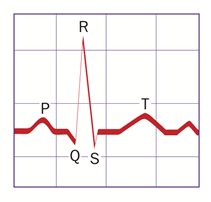
P wave representation is also known as Telemetry Rhythm or Sinus rhythm. There are other types of telemetry rhythms:
- Sinus tachycardia. Sinus tachycardia refers to a consistent heart rhythm where the heartbeat surpasses a normal cardiac rhythm. Although tachycardia, a faster heart rate, is a typical bodily reaction to physical activity or stress, it becomes worrisome when it emerges during periods of rest.
- Sinus bradycardia. A heart rhythm is characterized by the proper depolarization of cardiac muscle originating from the sinus node, with a heart rate of less than 60 beats per minute (bpm).
- Sinus Arrhythmia. A deviation from the usual sinus rhythm pattern, marked by an irregular heart rate where the variation in the R-R interval is more than 0.12 seconds. P waves usually exhibit uniformity and follow a consistent pattern indicating atrial activation stemming from the sinus node.
Medical Telemetry Surgery
This type of telemetry focuses on monitoring body functions. This telemetry is used in patients with heart and lung problems and in the process of recovering from high-risk surgeries (heart surgeries). To carry out this type of telemetry, you need to use other tools:
- Renal Telemetry: It allows you to monitor activities such as blood pressure, oxygen saturation, heart rates, and respiration.
- Tank Telemetry: It allows monitoring of the levels of fluids retained in a specific area of the body.
- Blood Pressure Telemetry: Monitor blood pressure levels.
- Oxygen Telemetry: also known as pulse oximeter, is responsible for measuring the amount of oxygen in the blood.
Currently, there are more medical telemetry tools, which are being developed with the advancement of technology. Those previously mentioned could be taken as the most common within the medical telemetry surgery.
Medical Telemetry Nurses
Telemetry nursing is a specialty of nursing focused on the monitoring and follow-up of patients with cardiac problems. Telemetry nurses (Registered Nurses – RNs) are trained in reading and using tools such as electrocardiograms (ECG / EKG) and telemedicine.
Tele-medicine: the remote diagnosis and treatment of patients by means of telecommunications technology. It is worth mentioning that telemetry is commonly related to short-term processes, in which the tele patient can fully recover.

Telemetry and Oncology
Oncology is the study of cancer. The treatment of patients with a cancer diagnosis may last weeks or even months. Currently, the use of decentralized telemetry units is more common and Oncology areas are the main ones that receive this type of unit.
The implementation of telemetry knowledge in oncology nursing is increasingly common, allowing monitoring in greater detail the state of the cancer patient. I recommend reading this short article about the experience of implementing telemetry in an oncology area:
“Transitioning to telemetry nursing has boosted nurses’ confidence and patient care, eliminating the need to transfer oncology patients to unfamiliar units.”
Telemetry Monitoring Systems
Telemetry is definitely necessary in any area of medicine, which helps make important decisions based on the behavior of the patient’s body. There are different types of monitoring systems:
- Bedside Monitoring. These are the systems that we commonly find in hospitals. These are located on one side of the patient and are directly connected to the patient. It allows real-time monitoring, providing information on the patient’s vital signs, such as an ECG.
- Remote Patient Monitoring. Remote monitoring of patients through the use of mobile devices. It allows doctors to be informed about the behavior of the patient’s vital signs, regardless of their location.
- Transport Patient Monitoring. These devices are located in a medical vehicle, for example within an ambulance or air transport.

Future of Telemetry
With the development of technology, new devices, and development areas, medical telemetry will take on greater importance over the future years. Currently, the use of portable devices for personal use, such as heart activity monitors or smartwatches is highly common.
Smartwatches or physical activity devices allow the user to be kept informed about their cardiac status. Wireless technology will become more and more powerful allowing real-time monitoring without the need to be directly connected to an ECG.
The patient can be monitored from any location, as long as the portable device they have is connected to a Wi-Fi network or has access to a telephone communication network. With the development of wireless devices, it will be necessary to implement increasingly complex security measures.
Cybersecurity will be an increasingly common branch of technology for the medical telemetry sector in the near future. Cybersecurity experts working in the medical industry must prioritize the protection and integrity of the patient’s data. The unauthorized use of patients’ data could be used for malicious processes if the wrong people gain access to these types of smart and portable devices.
Q&As
In this section, we will briefly answer the basic questions of the topic.
- What is telemetry? An automated system that allows collecting information through sensors located at close or remote distances.
- What is telemetry data? It’s the data collected by sensors, agents, and protocols. These data are given in sign language. The data can be stored in log files, metrics, events, etc.
- What is telemetry monitoring? It’s a technique that allows continuous monitoring of the data obtained through the medical telemetry measurement tool.
- What is medical telemetry/telemetry in medicine? A continuous monitoring of the vital signs of the human being. For example, the electrocardiogram (ECG) monitors the behavior of the heart.
- What is telemetry in healthcare/medicine? It is the monitoring of biological signals of medical importance such as EKG, EEG, and EOG.
- What is cardiac telemetry? It’s the use of portable devices responsible for monitoring patients with heart problems, and it also helps to measure oxygen levels.
- How to read telemetry strips? It is necessary to understand the following components of a wave:
- P-Wave: atrial contraction (upper heart chambers).
- PR Interval: Interval between P-Wave and ventricular depolarization (QRS Complex).
- QRS Complex: ventricular depolarization (lower heart chambers).
- T-Wave: atrial repolarization (upper heart chambers).
- What is mobile cardiac telemetry? A portable device in charge of monitoring the cardiac activity of a patient.
Unlocking the benefits of medical telemetry

Now that we have explored medical telemetry, let’s check some benefits it actually brings to healthcare and patient well-being. Integrating telemetry technology into the medical industry comes with a variety of advantages that improve the quality of care and streamline healthcare processes.
1. Real-time Monitoring for Timely Intervention
Medical telemetry enables healthcare providers to monitor patients’ vital signs in real-time, even from remote locations (as we mentioned with smart devices). This immediate data access allows swift intervention in case of anomalies or emergencies. Timely responses can be life-saving, ensuring that healthcare professionals can take proactive measures to address critical situations promptly.
2. Improved Patient Comfort and Mobility
In the past, the only solution for monitoring a patient’s well-being was having the patient within the hospital to continuously monitor vital signals. However, with today’s portable telemetry devices, patients can experience greater comfort and mobility during their recovery or treatment. These devices, including wearable sensors and smartwatches, empower individuals to go about their daily lives while healthcare providers receive vital data seamlessly.
3. Enhanced Accuracy and Precision
Medical telemetry systems provide precise and accurate data, reducing the margin for error in healthcare assessments. Whether monitoring cardiac rhythms, oxygen levels, or other vital parameters, telemetry technology ensures that healthcare professionals have access to reliable information for informed decision-making.
4. Cost-effective Healthcare Solutions
Efficient healthcare delivery is not only about improving patient outcomes but also about optimizing costs. Medical telemetry can lead to cost savings by reducing the need for extended hospital stays and unnecessary interventions. Remote patient monitoring, made possible by telemetry, allows for early detection of issues, preventing costly complications.
5. Empowering Patient Engagement
Telemetry technology empowers patients to actively engage in their own healthcare. By providing individuals with access to their health data through user-friendly interfaces, they become partners in their treatment plans. This increased engagement often results in better adherence to treatment protocols and healthier lifestyles.
6. Data-driven Decision Support
The wealth of data generated by medical telemetry systems offers healthcare professionals valuable insights into patient health trends. With the ability to analyze historical data, providers can tailor treatment plans more effectively, adapting them to individual patient needs. This data-driven approach enhances the overall quality of care.
7. Seamless Collaboration and Telemedicine
Medical telemetry facilitates seamless collaboration among healthcare teams, enabling specialists to access patient data regardless of location. Additionally, it supports the growing field of telemedicine, allowing patients to receive consultations and expert opinions without needing in-person visits, increasing access to healthcare services.
Conclusion
It’s a fact that the technology applied in medicine is something that must be constantly improved. Since it will allow certainty and precision during a delicate health process. On the side of doctors and nurses, it allows the development of more accurate diagnoses to support important decisions that can be made in the shortest possible time.
With the passage of time, the implementation of programming technologies will be necessary and inevitable. This will allow portable devices to carry out the function of monitoring vital signals from patients. Portable devices have proven to have the ability to be more than just entertainment and communication.
In this case, medical telemetry demands accurate components that can process vital patient data. LightningChart offers multiple options for data monitoring in the medical telemetry field.
LightningChart JS and .NET are charting libraries featuring the most advanced charting components for developing real-time monitoring applications, whether they must support electrical activity data, temperature, vibration, etc.
I invite you to review our articles, explaining the development and implementation of an ECG chart application using LightningChart. I hope this article has been to your liking and if you got here, thank you very much for reading!

Omar Urbano
Software Engineer


Continue learning with LightningChart
Data Visualization in Medical & Healthcare Applications
Written by a human | Updated on April 10th, 2025Charting Controls for Medical Healthcare Data Visualization Applications The fact that data and data visualization are everywhere in today's world, makes me wonder how data visualization impacts medical...
Creating a Smith Chart Application in .NET
Written by a human | Updated on April 9th, 2025Smith Charts The Smith chart is a diagram designed for the study and resolution of problems with transmission lines. This diagram is aimed at electrical and electronic engineers specializing in radio frequency....
Nbody Simulation Data Visualization
Written by a human | Updated on April 9th, 2025N-body Simulation Nbody simulation is maybe one of the most advanced data visualization types out there. The truth is that we’re not talking anymore about visualizing traditional data with a business focus and it...



If you have any questions, feel free to contact us!



©LightningChart Ltd 2026. All rights reserved.