






Creating an Open Meteo Weather Application with LightningChart Python
Tutorial
Assisted by AI
Learn to integrate the open meteo weather application with LightningChart in Python for powerful weather visualizations and data analysis.
Soroush Sohrabian
Software Developer

Introduction to the Project
This project develops a Historical Weather Application using LightningChart Python and Open-Meteo API to visualize historical, real-time and forecasting weather data. The goal is creating an interactive dashboard that provides different weather parameters like temperature, humidity, wind speed, pressure, and precipitation trends for Helsinki, Finland.
About the Dataset and Open-Meteo
We used Open-Meteo’s Historical Weather API, which provides past and real-time weather data. Open-Meteo offers free weather data with high precision and supports multiple weather parameters such as:
- Temperature (°C)
- Precipitation (mm)
- Wind Speed and Direction (km/h, °)
- Humidity (%)
- Soil Moisture and Soil Temperature (for deeper insights)
- Air Pressure
- Cloud Coverage
The dataset covers the past 24 hours and provides hourly forecasts, which makes it ideal for monitoring weather patterns.
LightningChart Python
LightningChart Python is a high-performance data visualization library that offers real-time and different interactive charting. It allows the creation of 2D and 3D visualizations that makies it ideal for real-time weather monitoring.

Features and Chart Types Used in the Project
In this project, we used several LightningChart components:
- Gauge Chart: Displays real-time temperature.
- Polar Chart: Shows wind direction and speed.
- 3D Chart: Visualizes weather conditions dynamically.
- Bar Chart: Represents soil temperature, moisture, and cloud coverage.
- Multi-Line Chart: Monitors environmental trends like pressure, humidity, and wind speed.
Performance Characteristics
LightningChart Python provides:
- GPU acceleration that enables smooth visualization even with large datasets.
- Real-time updates which makes it ideal for monitoring live weather changes.
- Low CPU and memory usage which improves dashboard responsiveness.
Setting Up Python Environment
Before running the project, install Python and the other required libraries using:
pip install requests pandas lightningchart trimesh pytzOverview of Libraries Used
- NumPy & Pandas – Handling and processing numerical data.
- LightningChart – Creating real-time, interactive visualizations.
- Trimesh: For 3D weather condition models.
- Requests: To fetch data from the Open-Meteo API.
- pytz: To manage timezone conversions.
Setting Up Your Development Environment
- Set up a virtual environment:
python -m venv rf_analysis_env
source rf_analysis_env/bin/activate # On Windows: rf_analysis_env\Scripts\activate- Use Visual Studio Code (VSCode) for a streamlined development experience.
Loading and Processing Data
To create this Open Meteo weather application, we will fetch the weather data using the following function:
def fetch_weather_data():
    API_URL = "https://api.open-meteo.com/v1/forecast"
    params = {
        "latitude": 60.1699,
        "longitude": 24.9384,
        "hourly": "temperature_2m,precipitation,wind_speed_10m",
        "past_days": 1,
        "forecast_days": 0,
        "timezone": "auto",
    }
    response = requests.get(API_URL, params=params)
    return pd.DataFrame(response.json()["hourly"])
Handling and Preprocessing the Data
- Convert timestamps to local Helsinki time.
- Handle missing values and outliers.
- Aggregate hourly data for daily analysis.
Visualizing Data with LightningChart Python
Here are some examples that shows how we created key visualizations:
Wind Direction & Speed (Polar Chart)
polar_chart = dashboard.PolarChart(column_index=0, row_index=0, row_span=4, column_span=4)
polar_chart.set_title("Current Wind Direction & Speed")
polar_chart.add_heatmap_series(sectors=12, annuli=5)
Real-Time Temperature (Gauge Chart)
gauge_chart = dashboard.GaugeChart(column_index=10, row_index=0, row_span=4, column_span=2)
gauge_chart.set_title("Current Temperature (°C)")
gauge_chart.set_interval(start=-30, end=50).set_value(0)
3D Weather Condition Visualization
chart_3d = dashboard.Chart3D(row_index=0, column_index=8, row_span=4, column_span=2)
chart_3d.set_title("Current Weather Condition")
chart_3d.set_camera_location(0, 1, 5)
Environmental Data Trends (Multi-Line Chart)
line_chart = dashboard.ChartXY(column_index=4, row_index=4, row_span=4, column_span=8)
line_chart.set_title("Environmental Data Trends")
series = line_chart.add_line_series(data_pattern="ProgressiveX")
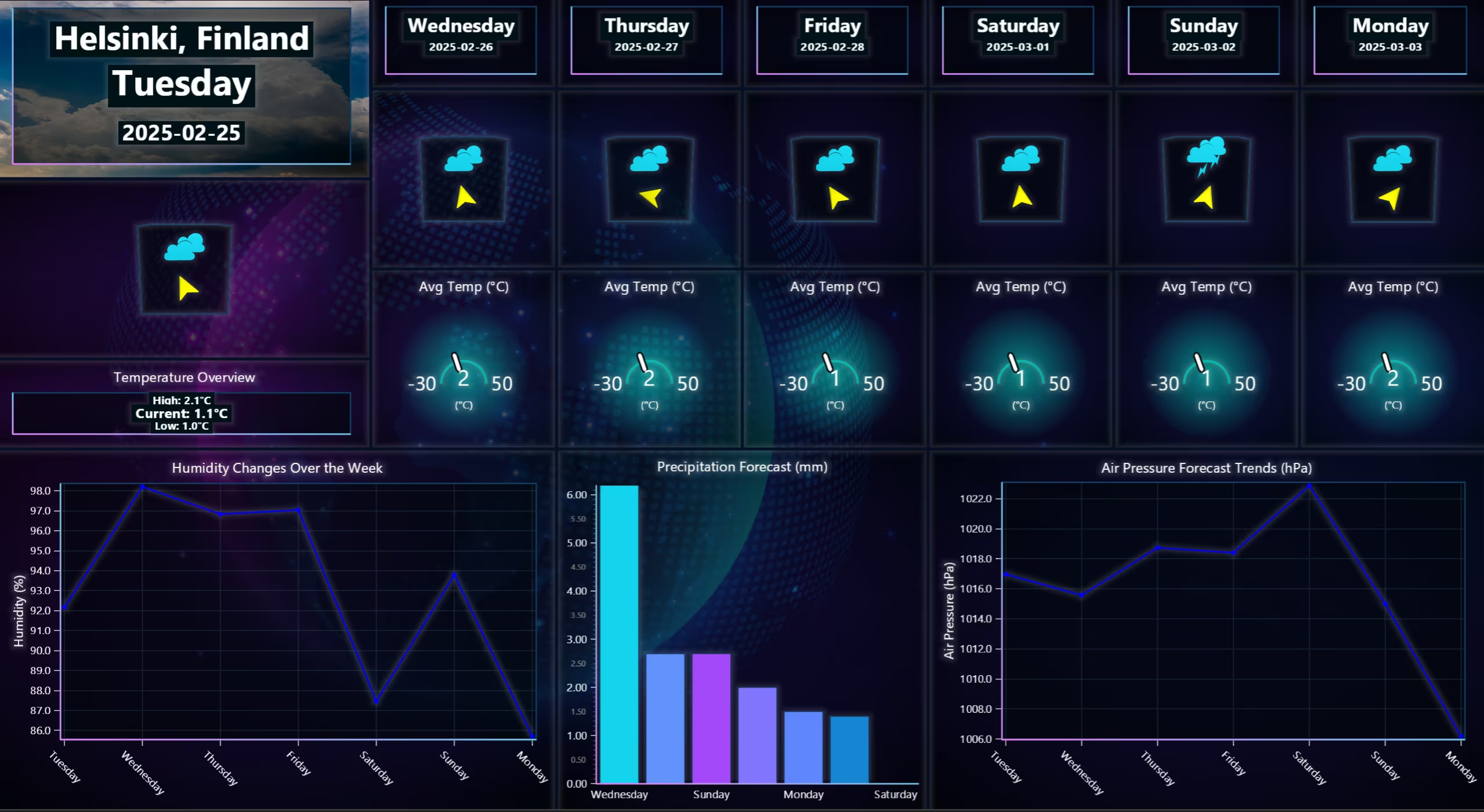
Weekly Forecasting Dashboard
The following dashboard displays how the Open Meteo weather application compiles using the Open Meteo API.
Customizing the Open Meteo Weather Application Visualizations
- Color Palettes: Used different gradient colors to show better data intensities.
- Legends & Labels: Improved readability of weather parameters.
Conclusion
This Open Meteo weather application project demonstrates how to leverage LightningChart Python with Open-Meteo API to visualize a real-time, historical and forecasting weather monitoring system. The dashboard visualizes weather trends that enable us to improve data-driven decision-making for weather analysis.
Continue learning with LightningChart
Ionic Capacitor
Learn how to use Ionic Capacitor for data visualization and build a mobile charting application with Angular & LightningChart JS
Create a JavaScript Pie Chart with NodeJS, TypeScript & LightningChart
Written by a human | Updated on April 10th, 2025JavaScript Pie Chart with NodeJS & TypeScript Today, we are going to do a short tutorial on how to generate a pie chart using Node JS, TypeScript, and LigningCharts JS. To see how to get LightningChart JS for...
Real-time data visualization with WebSockets
Written by a human | Updated on April 10th, 2025WebSockets Data Visualization in Real-Time These days it is ever increasingly common that people require web solutions for their applications and services. Data visualization is not an exception to this, as...



If you have any questions, feel free to contact us!



©LightningChart Ltd 2026. All rights reserved.