






Electric Motor Temperature Dashboard with LightningChart Python
Tutorial
Written by a Human
Creating an electric motor temperature dashboard using LightningChart Python to visualize key performance parameters.
Roy Liu
Data Science Python Developer


Introduction
Monitoring and analyzing temperature variations in electric motors is essential for optimizing performance and ensuring operational efficiency. This project presents a Python-based dashboard built with LightningChart Python, enabling the visualization of key motor parameters, including temperature, torque, and motor speed.
LightningChart Python
LightningChart Python is a high-performance visualization library that enables developers to create advanced visualizations with optimized rendering. It is particularly useful for working with large datasets, making it well-suited for this electric motor analysis project.
Key Features of LightningChart Python
- Optimized rendering for handling large datasets.
- Interactive charts with dynamic customization.
- Comprehensive support for multiple chart types including line charts, scatter plots, histograms, and heatmaps.

Setting Up Python Environment
To set up the Python environment for this Python flight tracking application project, you need to install Python and the necessary libraries such as LightningChart Python. You can check the original project on GitHub.
Here’s a quick setup guide:
- Install Python: Download and install the latest version of Python from the official website.
- Install Libraries: Use
pipto install the required libraries:
pip install lightningchart pandas numpy- Set up your development environment by creating a new project directory and installing the required libraries. Ensure that LightningChart Python is properly licensed.
Dataset Extraction
The dataset is provided in a compressed .7z file to reduce repository size. Before running the code, please extract the dataset found inside the dataset folder.
Overview of Libraries Used
- Pandas: For data manipulation and analysis. (documentation)
- NumPy: For numerical computations, particularly in data binning and transformations. (documentation)
- LightningChart Python: For creating high-performance, interactive data visualizations. (documentation)
Dashboard Implementation
The core of this project is the Electric Motor Temperature Dashboard, which consists of multiple visualizations:
Line Chart: Average Temperature Over Profiles
This line chart visualizes the average temperature of different components over multiple measurement sessions (profile IDs). The temperatures analyzed include coolant, stator winding, stator tooth, stator yoke, permanent magnet (pm), and ambient temperature.
# LINE CHART: TEMPERATURE TRENDS
chart_line = dashboard.ChartXY(column_index=0, row_index=0, column_span=2)
chart_line.set_title("Average Temperature Over Profiles")

# Group data by profile_id and compute average temperature values
df_avg_temp = df.groupby("profile_id")[["coolant", "stator_winding", "stator_tooth", "stator_yoke", "pm", "ambient"]].mean().reset_index()

# Plot each temperature series dynamically
for col in ["coolant", "stator_winding", "stator_tooth", "stator_yoke", "pm", "ambient"]:
    series = chart_line.add_line_series(data_pattern='ProgressiveX')
    series.append_samples(df_avg_temp["profile_id"].tolist(), df_avg_temp[col].tolist()).set_name(col)
Histogram: Stator Winding Temperature Distribution
A histogram is used to analyze the distribution of stator winding temperature, helping identify its range and frequency.
# HISTOGRAM: STATOR WINDING TEMPERATURE DISTRIBUTION
chart_histogram = dashboard.BarChart(column_index=2, row_index=0, column_span=1, row_span=3)
chart_histogram.set_title("Stator Winding Temp")

# Compute histogram bins
num_bins = 25
counts, bin_edges = np.histogram(df["stator_winding"].dropna(), bins=num_bins)
bar_data = [{"category": f"{bin_edges[i]:.1f}–{bin_edges[i+1]:.1f}", "value": int(count)} for i, count in enumerate(counts)]
chart_histogram.set_data(bar_data)
Scatter Plot: Torque vs. Motor Speed
This scatter plot provides insights into the relationship between torque and motor speed, with color gradients representing variations in torque values.
# SCATTER PLOT: TORQUE VS MOTOR SPEED
chart_scatter = dashboard.ChartXY(column_index=0, row_index=1, column_span=2)
chart_scatter.set_title("Torque vs. Motor Speed")
point_series = chart_scatter.add_point_series(data_pattern='ProgressiveY')
point_series.add(df["motor_speed"], df["torque"])
Heatmap: Average Stator Winding Temperature Across Speed & Torque
This heatmap represents the average stator winding temperature as a function of motor speed and torque. Higher temperatures are visually distinguished through a color gradient.
# HEATMAP: TEMPERATURE ACROSS SPEED & TORQUE
chart_heatmap = dashboard.ChartXY(column_index=0, row_index=2, column_span=2)
chart_heatmap.set_title("Avg Stator Winding Temp Across Speed & Torque")
heatmap_series = chart_heatmap.add_heatmap_grid_series(columns=500, rows=500)
heatmap_series.invalidate_intensity_values(heatmap_array.tolist())
Final Dashboard
Bringing all visualizations together, the final dashboard provides an interactive and comprehensive analysis of electric motor behavior.

- Top Left: Line chart showing average temperature trends.
- Right: Histogram of stator winding temperature distribution.
- Middle: Scatter plot for torque vs. motor speed.
- Bottom: Heatmap displaying temperature variations across motor speed and torque.
Conclusion
This project demonstrates the effectiveness of LightningChart Python in creating an advanced Electric Motor Temperature Dashboard. With optimized rendering and interactive visualizations, this dashboard enables detailed motor analysis, improving insights into temperature behavior, torque, and performance characteristics.
The techniques applied in this project can be extended to real-world industrial applications for monitoring and predictive maintenance of electric motors.
Continue learning with LightningChart

Javascript Charting Library comparison 2026
Every year someone publishes a listicle of JavaScript charting libraries. They screenshot a demo, note the GitHub stars, paste in the npm install command, and call it a day. Then you follow their recommendation, get six months into your project, and discover that your...

Visualizing 10 Million Data Points in the Browser (2026): The Technical Deep-Dive
Ten Million Data Points in the Browser: How WebGL Makes Mass Datasets Interactive Ten million data points. That number used to mean a database problem, not a front-end problem. Now research teams want to explore it interactively in a browser. Trading desks want...
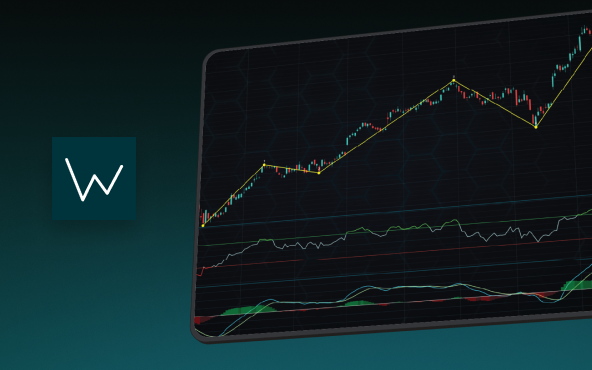
Elliott Wave Theory in Trading
Financial markets often appear chaotic, but many traders believe that price movements follow recurring patterns driven by human psychology. One of the most influential approaches based on this idea is the Elliott Wave Theory. Developed nearly a century ago, it remains one of the most widely studied methods of technical analysis.



If you have any questions, feel free to contact us!
©LightningChart Ltd 2025. All rights reserved.