






Volume Rate of Change for Technical Analysis in Trading
Article
Learn how to integrate the Volume Rate of Change technical indicator into your fintech software applications.
Ahmad Omid
Data Science Developer


Introduction to Volume Rate of Change
Volume plays a crucial role in understanding market trends. It reflects the intensity of trading activity, helping traders gauge the strength and commitment behind price movements. High volume often signals strong participation, whether in accumulation or distribution phases, while low volume may indicate a lack of conviction.
The Volume Rate of Change (VROC) builds upon the importance of volume by analyzing its momentum. Similar to the price-based Rate of Change (ROC) indicator, the VROC measures the speed and direction of volume changes over a specified period. By evaluating shifts in trading volume, the indicator helps traders assess volatility, validate price moves, and detect potential reversals or breakouts.
In trading, the Volume Rate of Change is a key tool for confirming price movements. For example, a price rally accompanied by increasing VROC values signals robust market sentiment, while a price drop with rising VROC may indicate significant selling pressure.
Formula
The formula for the Volume Rate of Change is straightforward:

Where:
- Current Volume refers to the most recent trading volume.
- Volume (n periods ago) represents the volume observed n periods back.
- n is the chosen period length.
True Range Calculation
While VROC doesn’t directly incorporate the concept of true range (commonly used in indicators like ATR), it does measure the “true range” of volume dynamics. By focusing on relative changes over time, VROC identifies whether trading activity is increasing or decreasing relative to a historical benchmark.
Interpretation
- Positive VROC: Indicates an increase in trading volume compared to the past, often signaling heightened interest or momentum.
- Negative VROC: Shows a decrease in volume, possibly reflecting waning participation or a consolidation phase.
Key Components
- Lookback Period (n): Determines the sensitivity of the indicator. Shorter periods capture immediate changes, while longer periods smooth out fluctuations for broader trends.
- Volume Data: Ensures the indicator reflects actual market participation rather than price movements alone.
How to Create the Technical Indicator Using LC JS Trader
Step 1: Get LightningChart JS Trader
To begin, you’ll need access to LightningChart JS Trader. This library provides the tools necessary to create advanced technical indicators, including the Volume Rate of Change Indicator. Visit the LightningChart JS Trader page to download the required components and review the documentation.
Step 2: Review the Interactive Example
LightningChart JS Trader includes interactive examples that demonstrate how to create custom technical indicators. Start by reviewing the documentation, focusing on how to integrate the Volume Rate of Change Indicator into your chart setup. The interactive examples will guide you through the process of setting up the VROC Indicator, from importing the necessary modules to modify the chart settings.
Step 3: Code Explanation
In this step, we will break down the code that creates the chart with the Volume Rate of Change Indicator, as shown in the image, using LightningChart JS Trader. The code demonstrates how to initialize a trading chart, apply the VROC Indicator, and customize its appearance.

Here’s a detailed breakdown of each section:
A. Importing the Required Libraries:
   const lcjsTrader = require('@arction/lcjs-trader')
   const lcjs = require('@arction/lcjs')
const { Themes } = lcjs- lcjsTrader: This library provides access to the LightningChart JS Trader functionalities, allowing you to create advanced financial charts.
- lcjs: The main LightningChart JS library, used for general charting functionality.
- Themes: A property within lcjs that provides access to pre-built themes. In this case, we are using the darkGold theme to style the chart.
B. Initializing the Trading Chart:
   lcjsTrader.trader(TRADER_LICENSE).then(async (trader) => {
    // Create a trading chart.
const tradingChart = trader.tradingChart({ loadFromStorage: false, colorTheme: Themes.darkGold })trader(TRADER_LICENSE): Initializes the LightningChart JS Trader with the provided license key (TRADER_LICENSE). This is required to access the charting functionalities for financial data.
Note you can request a LightningChart JS Trader trial license, which is free.
tradingChart(): This function creates a trading chart with certain options.loadFromStorage: false: This disables the loading of previously stored chart data from local storage, ensuring a fresh chart setup.colorTheme: Themes.darkGold: This applies the darkGold theme to the chart, which influences the background color, gridlines, and other visual elements.
C. Adding and Customizing the Indicator
    // Add a Volume Rate of Change indicator
    const vroc = tradingChart.indicators().addVolumeRateOfChange()
    vroc.setPeriodCount(14)
    vroc.setLineColor('#FF8F33')
vroc.setLineWidth(3)addVolumeRateOfChange(): VROC is similar to the regular Rate of Change, but is calculated based on volume instead of price. It is used to measure the volatility in volume as well as to confirm price moves. Appears as a segment below the main price chart.
vroc.setPeriodCount(14): Sets the number of time periods (n) used to calculate the indicator.
vroc.setLineColor('#FF8F33'): Changes the line color of the indicator to orange.
vroc.setLineWidth(3): Sets the line thickness of VROC indicator to 3 pixels. This makes the line more prominent and easier to observe during analysis.
D. Loading Data from a CSV File
    // Reading data from a file.
    await fetch(`${document.head.baseURI}examples/assets/0000/Alphabet Inc (GOOGL).csv`).then((res) => res.text()).then((text) => {
        tradingChart.readCsvString(text, 'Alphabet Inc (GOOGL)')
})fetch(): This function retrieves a CSV file containing historical data for Alphabet Inc. (GOOGL). The CSV file includes pricing information for the company’s stock, which is plotted on the chart.readCsvString(): This function reads the CSV data and interprets it as pricing data for Alphabet Inc. The second argument (‘Alphabet Inc (GOOGL)’) sets the label for the chart, as seen at the top of the chart image.
E. Setting the Currency for the Chart
    tradingChart.setCurrency('USD')
})setCurrency('USD'): This sets the currency of the chart to USD, ensuring that the pricing data is interpreted and displayed in US dollars.
** Enumeration of Moving Average Types in LC JS Trader:
- Exponential Moving Average (EMA): 0
- None: 1 (No moving average applied)
- Simple Moving Average (SMA): 2
- Time Series Moving Average (TSMA): 3
- Triangular Moving Average (TMA): 4
- Variable Moving Average (VMA): 5
- Variable Index Dynamic Average (VIDYA): 6
- Volume Weighted Moving Average (VWMA): 7
- Weighted Moving Average (WMA): 8
- Welles Wilder’s Smoothing (WWS): 9
Analyzing Market Trends with VROC
Short-Term vs. Long-Term Periods
The choice of period length significantly impacts the interpretation of the Volume Rate of Change:
- Short-term periods (e.g., 5-10 days) highlight rapid shifts in trading activity, making them suitable for day traders and scalpers.
- Long-term periods (e.g., 50-100 days) emphasize broader volume trends, helping swing and position traders understand overarching market sentiment.
Impact of Different Periods on VROC
- Shorter periods: Produce more responsive VROC values but may result in false signals due to noise.
- Longer periods: Offer smoother results, reducing noise but potentially lagging behind sudden market changes.
By testing different periods, traders can tailor the VROC indicator to align with their trading strategies and market conditions.
Advantages and Limitations of the Indicator
Advantages
- Volume Focus: Unlike price-based indicators, VROC emphasizes trading activity, providing a unique perspective on market trends.
- Confirmation Tool: VROC helps validate price movements, ensuring that rallies or declines are supported by substantial participation.
- Flexibility: Adjustable periods make it suitable for various trading styles and timeframes.
Limitations
- Lagging Nature: Like most indicators, VROC can lag behind rapid market changes, especially with longer periods.
- Standalone Use: Relying solely on VROC without considering price action or other indicators may lead to incomplete analysis.
- Noise Sensitivity: Short-term VROC calculations can produce erratic values, making interpretation challenging.
Conclusion
The Volume Rate of Change (VROC) is a valuable tool for analyzing market dynamics by focusing on the momentum of trading volume. It complements price-based indicators, offering insights into the strength of market movements and helping traders confirm trends or anticipate reversals. However, for maximum effectiveness, VROC should be used alongside other analytical tools and price action strategies to provide a comprehensive view of market conditions.
A significant advantage of using LightningChart JS Trader is its ability to seamlessly visualize and interact with technical indicators like VROC. With its high-performance rendering and customizable features, LightningChart JS Trader empowers users to dynamically adjust parameters, interpret results in real-time, and enhance decision-making. This interactivity is especially critical when exploring indicators like VROC, where period adjustments and data responsiveness are essential.
Continue learning with LightningChart

Trend Lines in Trading
Trend lines are among the simplest yet most powerful tools in technical analysis. They help traders visualize market direction, identify potential support and resistance levels, and make more informed trading decisions. Despite their simplicity, trend lines remain a...
Best Python Charting Library in 2026
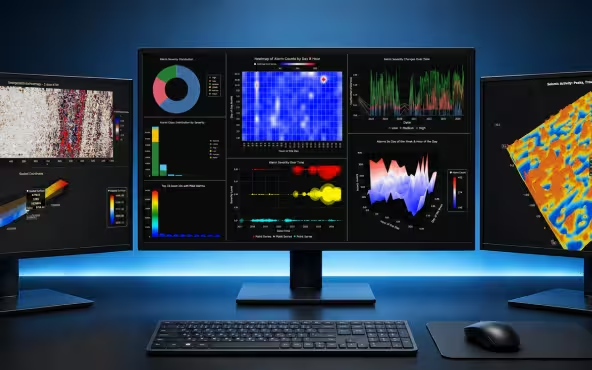
Python's charting ecosystem is large, overlapping, and regularly misunderstood. Most comparison guides stop at Matplotlib, Plotly, and Seaborn. This one goes further: it covers what happens when your datasets grow large, your update rates increase, or your chart types...
Best TradingView Charting Library Alternative
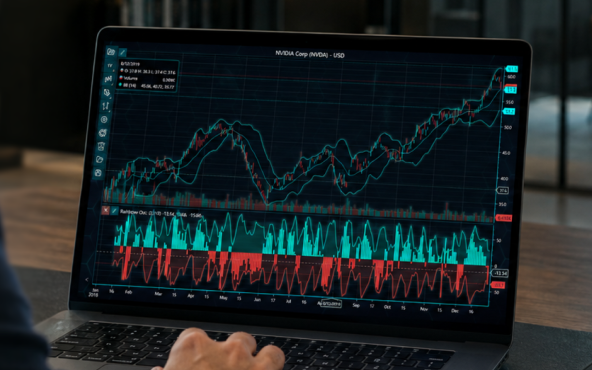
TradingView's charting libraries are the most visible option for fintech developers. Visibility is not the same as capability. This guide is for developers who have hit the wall on candle count limits, watermark restrictions, branding requirements, real-time...



If you have any questions, feel free to contact us!



©LightningChart Ltd 2026. All rights reserved.