






LightningChart PythonReal-Time Seismic Activity Monitoring Application
TutorialCreate a real-time earthquake tracking and seismic activity monitoring application with LightningChart Python
Written by a human | Updated on April 23rd, 2025
Python Seismic Data Processing Application
What is seismic data processing?
Seismic data processing interprets data collected from Earth’s subsurface features. This data can be crucial for applications such as oil and gas exploration, seismology and geophysics, and perhaps most importantly, earthquake detection. In essence, seismic data processing is a fundamental aspect of geophysics that often employs various techniques to enhance and interpret data.
Importance of seismic data in geophysics
Seismic data is a cornerstone of geophysics. It can offer insights beneath the Earth’s surface to locate natural resources. It is also vital for assessing seismic hazards and understanding the mechanics of earthquakes. Seismic data analysis is crucial for scientific research and practical applications, such as infrastructure development and disaster preparedness.
Why is it important to monitor seismic data in real-time?
Real-time seismic data monitoring is essential for early warning systems that can save lives and mitigate the damage caused during seismic events as much as possible. It also helps continuously assess seismic activity, providing valuable scientific research and public safety data. Real-time monitoring allows for the immediate detection of such seismic events, which is crucial for quick emergency response and mitigation strategies.
LightningChart Python

LightningChart Python is a powerful data visualization library designed for high-performance applications. It provides various chart types and features that cater to demanding data visualization needs, making it ideal for real-time data applications like seismic monitoring. As the name suggests, this tool is particularly effective for Python seismic data processing, allowing the efficient handling and visualization of large datasets. In this project, we utilize the XY Chart and a Dashboard component, which links a Zoom Band Chart to the XY Chart.
Features and chart types
- High performance: Capable of creating visualizations with large datasets or real-time streaming data with smooth performance
- Interactivity: Visualized data are fully interactive and responsive
- Variety of chart types: Supports line charts, bar charts, scatter charts, 3D charts, and more
- Customizability: Offers extensive customization options for creating tailored visualizations
Setting Up Python Environment
Installing Python and necessary libraries
Ensure you have Python installed on your system. You can download it from the official Python website. After installing Python, install the necessary libraries through your terminal using pip:
pip install lightningchart obspyOverview of libraries used
- LightningChart Python: High-performance data visualizing library (documentation)
- ObsPy: Python framework for accessing and processing seismological data, an essential part of Python seismic data processing (documentation)
Setting up your development environment
For this project, we used Visual Studio Code, a versatile and powerful code editor that supports Python development. It offers a wide range of extensions for enhancing productivity and ease of use. Here’s how to set it up:
1. Install Visual Studio Code
2. Install the Python extension from the Visual Studio Code marketplace
3. Open your project folder and set up the virtual environment by creating a file with a .py extension
4. Import necessary libraries into the environment like LightningChart Python and ObsPy
Loading and Processing Seismic Data
Understanding how to load and preprocess seismic data is crucial to visualize it effectively. In this project, we use the ObsPy library to fetch and process seismic data from a SeedLink server. This section covers the basics of loading and preparing seismic data for visualization.
How to load seismic data files
Seismic data can be obtained from various sources, including public databases and real-time data feeds. For this project, we utilize the ObsPy library, a powerful tool for accessing and processing seismological data. Here’s a brief overview:
- Make sure you have ObsPy Installed:
pip install obspy - Connect to a SeedLink server (Refer to SeedLink documentation)
Basic seismic data processing techniques
Basic processing involves reading the seismic data, converting it to a usable format, and performing necessary processing techniques such as filtering and resampling. This is part of the seismic data workflow and ensures that the data is optimal for analysis and visualization.
Handling and preprocessing open-source seismic data
Open-source seismic data often comes in different formats. Use ObsPy to handle various data formats, preprocess the data, and prepare it for visualization. This step is crucial for efficient seismic data loading and ensuring the data is ready for detailed analysis or visualization.
Visualizing Seismic Data with LightningChart
This Python seismic data processing project gathers seismic data from a station’s sensors in Trieste, Italy, part of the Mediterranean Seismographic Network. However, knowing their codes lets you connect to other stations and sensors. These codes are typically found in the documentation or data access pages of various seismic networks and data providers.
For example, the IRIS (Incorporated Research Institutions for Seismology), the USGS (United States Geological Survey), and the FDSN (International Federation of Digital Seismograph Networks) websites provide extensive information on available seismic stations and their corresponding codes.
Introduction to LightningChart for Python
LightningChart for Python allows the creation of interactive and high-performance charts. It is particularly suitable for applications that require real-time data visualization, making it an ideal choice for a seismic data visualization tool.
Creating the Dashboard and Charts
We create a dashboard with LightningChart Python to host our main Python seismic data processing chart and a zoom band chart for detailed analysis. Here’s how you can set up the dashboard:
import lightningchart as lc

# Set LightningChart license
lc.set_license("YOUR_LICENSE")

# Create a dashboard with 1 column and four rows using a Dark theme
dashboard = lc.Dashboard(columns=1, rows=4, theme=lc.Themes.Dark)
dashboard.open(live=True)

# Create a chart occupying the first three rows of the dashboard
chart = dashboard.ChartXY(column_index=0, row_index=0,
													column_span=1, row_span=3)

chart.set_title('Seismic data from Trieste, Italy')
The ‘Dashboard’ object is initialized with 1 column and four rows. The ‘ChartXY’ is placed in the first three rows, allowing enough space to display the seismic data. The dashboard is also created with the Dark theme, but LightningChart Python offers other themes such as White, Light, Black, Cyberspace, and TurquoiseHexagon,
Customizing the Chart
Next, we dispose of the default axes and create custom high-precision axes suitable for displaying seismic data:
# Disposing default axes
chart.get_default_x_axis().dispose()
chart.get_default_y_axis().dispose()

# High-Precision X-axis
x_axis = chart.add_x_axis(axis_type='linear-highPrecision')
x_axis.set_tick_strategy('DateTime')
x_axis.set_scroll_strategy('progressive')
x_axis.set_interval(start=0, end=10000, stop_axis_after=False)
Adding Series and Y-axes
In LightningChart, a “series” represents a collection of data points plotted on the chart. For our seismic data visualization, we use multiple series to represent different components of the seismic data: East-West, North-South, and Vertical. These components correspond to the directions in which the ground is moving during seismic events:
- East-West: Measures the ground movement in the east-west direction
- North-South: Measures the ground movement in the north-south direction
- Vertical: Measures the ground movement vertically (up and down)
We add separate Y-axes for each component:
# List to store series for each data stream
series_list = []

# Function to add a series and corresponding Y-axis to the chart
def add_series_and_y_axis(chart, stack_index, title):
	y_axis = chart.add_y_axis(stack_index=stack_index)
	y_axis.set_margins(15 if stack_index > 0 else 0,
			  15 if stack_index < 2 else 0)
	y_axis.set_title(title)

	series = chart.add_line_series(
		x_axis=x_axis, y_axis=y_axis,
data_pattern='ProgressiveX').set_line_thickness(2)
	series_list.append(series)
	return series

# Information for each data stream
titles = ["East-West", "North-South", "Vertical"]
channels = ["HHE", "HHN", "HHZ"]

# Add series and Y-axes to the chart for each data stream
for i in range(3):
	add_series_and_y_axis(chart, i, titles[i])
This function creates a new Y-axis for each data stream, customizes its margins and title, and adds it to the chart.
Adding a Zoom Band Chart
To enhance the visualization, we add a Zoom Band Chart that allows users to zoom in on specific sections of the data:
# Create Zoom Band Chart attached to the main ChartXY
zbc = dashboard.ZoomBandChart(chart=chart, column_index=0, row_index=3, row_span=1, axis_type='linear-highPrecision')

# Add all series to the Zoom Band Chart
for series in series_list:
    zbc.add_series(series)
The Zoom Band Chart is linked to the main chart and displays the same data, providing a detailed view of specific time intervals.
Final Python Seismic Data Processing Application

Conclusion
We have walked through setting up a Python environment, loading and processing seismic data, and visualizing it using LightningChart Python. The workflow involves creating a dashboard, customizing charts, adding series, and utilizing a Zoom Band Chart for detailed analysis.
Benefits of using LightningChart Python for visualizing data
LightningChart Python offers high performance, real-time capabilities, and extensive customization options, making it an excellent tool for visualizing seismic data. These features are particularly beneficial for real-time seismic monitoring applications, allowing for detailed and responsive seismic analysis.
By leveraging LightningChart Python, we can efficiently visualize complex seismic data and gain valuable insights into seismic activity. This demonstrates the potential for advanced real-time earthquake tracking and seismic activity monitoring applications. For more detailed information on how to use LightningChart Python, refer to the LightningChart Python documentation.

Roy Liu
Data Science Python Developer


Continue learning with LightningChart
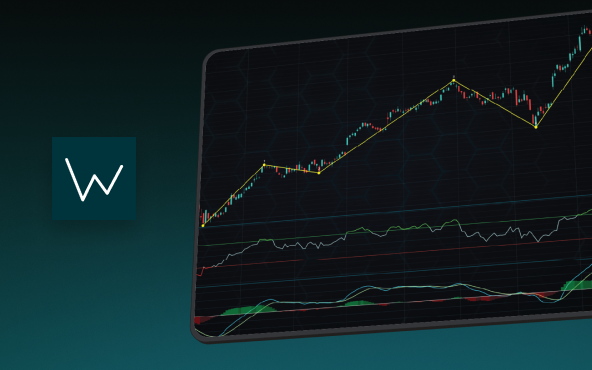
Elliott Wave Theory in Trading
Financial markets often appear chaotic, but many traders believe that price movements follow recurring patterns driven by human psychology. One of the most influential approaches based on this idea is the Elliott Wave Theory. Developed nearly a century ago, it remains one of the most widely studied methods of technical analysis.
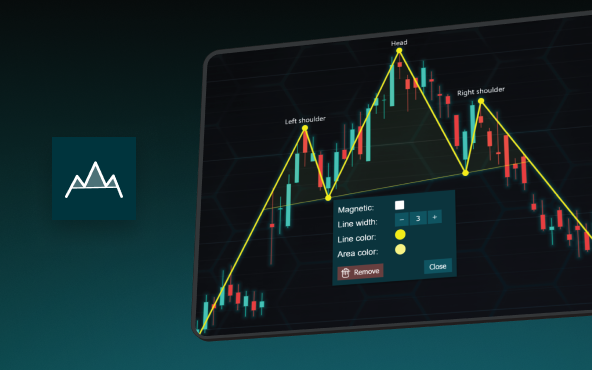
The Head and Shoulders Pattern in Technical Analysis
The Head and Shoulders Pattern in Technical Analysis The Head and Shoulders Pattern in Technical Analysis The Head and Shoulders pattern is one of the most recognized and widely used chart patterns in technical analysis. It is considered a reliable reversal pattern...
Best Telerik Charts Alternative in 2026: GPU Performance for WPF, WinForms, and Web
Telerik from Progress is a comprehensive UI component suite covering WPF, WinForms, ASP.NET, Blazor, and JavaScript. The charting components: RadChartView for WPF and WinForms, and Kendo UI Charts for web and Blazor, arrive bundled with the suite purchase. For teams...



If you have any questions, feel free to contact us!



©LightningChart Ltd 2026. All rights reserved.