






LightningChartPrice Oscillator (Pt. 1)
ArticleA complete review of Price Oscillators for advanced trading technical analysis.
Written by a human | Updated on April 22nd, 2025
Price Oscillators
Price oscillators use two moving averages to calculate the difference between the two data points. They usually use a shorter average and a longer average. Note that the longer the period, the slower the process will be to locate trends.
In the case of price oscillators, when the two averages meet, a bullish crossover occurs. When the shorter period is below the longer average, a bearish crossover occurs.
In technical analysis, a price oscillator is a momentum indicator that measures the speed and magnitude of price movements. It is commonly used to identify overbought and oversold conditions, as well as to generate trading signals.
Using Price Oscillators
Price oscillators identify potential trading opportunities by looking for divergences between the oscillator and the price trend. Divergence occurs when the oscillator moves in the opposite direction of the price trend. For example, if the price is rising but the oscillator is falling, this could be a sign that the uptrend is losing momentum and that a reversal is likely.
Given this brief introduction, we can begin to review different price oscillators. Let’s get started!
Example of Price Oscillators: Aroon, Awesome Oscillator, Balance of Power, and Commodity Channel Index.
Aroon Oscillator
The Aroon price oscillator was originally developed by Tushar Chande. This oscillator focuses on the strength of a current trend and its possible continuation. This oscillator makes use of the Aroon indicator to measure the trend. This oscillator calculates values from the last 25 periods and has two lines:
- Aroon Up: Measures the upward trend.
- Aroon down: Measures the downtrend.
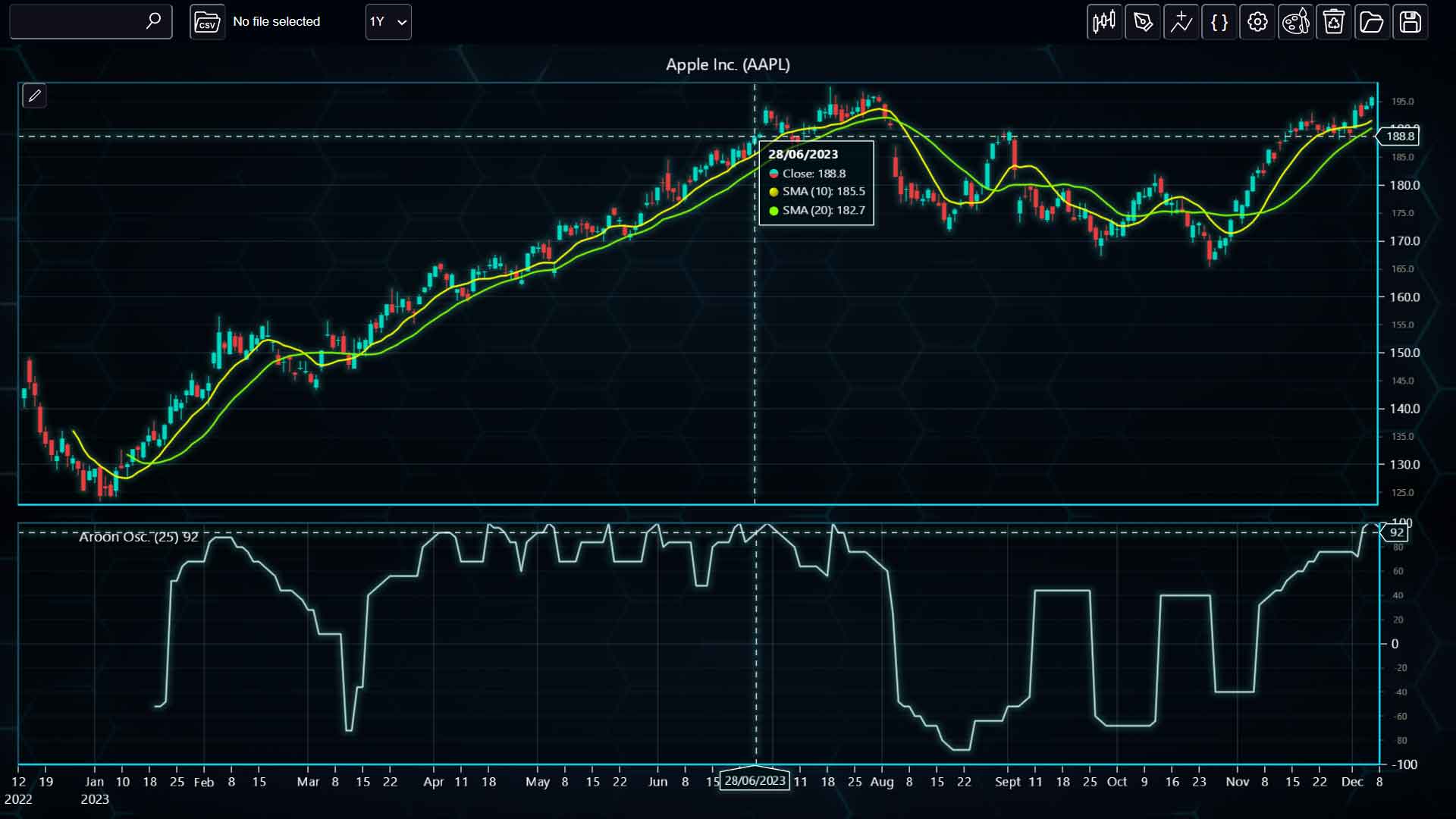
Aroon Price Oscillator
Values above zero correspond to an upward trend, while negative values correspond to a downward trend.
Formula:
Aroon Up = 100*(x-days since x days high)/x
Aroon Down = 100*(x-days since x days low)/x
Aroon Oscillator = Aroon Up - Aroon Down
Awesome Oscillator
The Awesome Price Oscillator was developed by Bill Williams and it uses two simple moving averages (SMAs) to perform calculations that help predict bullish and bearish trends and predict possible reversals. The two moving averages are of different lengths, one shorter and one longer.
The shortest average consists of 5 periods, while the longest has 34 periods. When the shortest period is greater than the longest, it means that its value is above zero, indicating a bull market. When the shortest period is below the longest, it indicates a bear market.

Formula:
Period = 5 period SMA - 34 period SMABalance of Power (BOP)
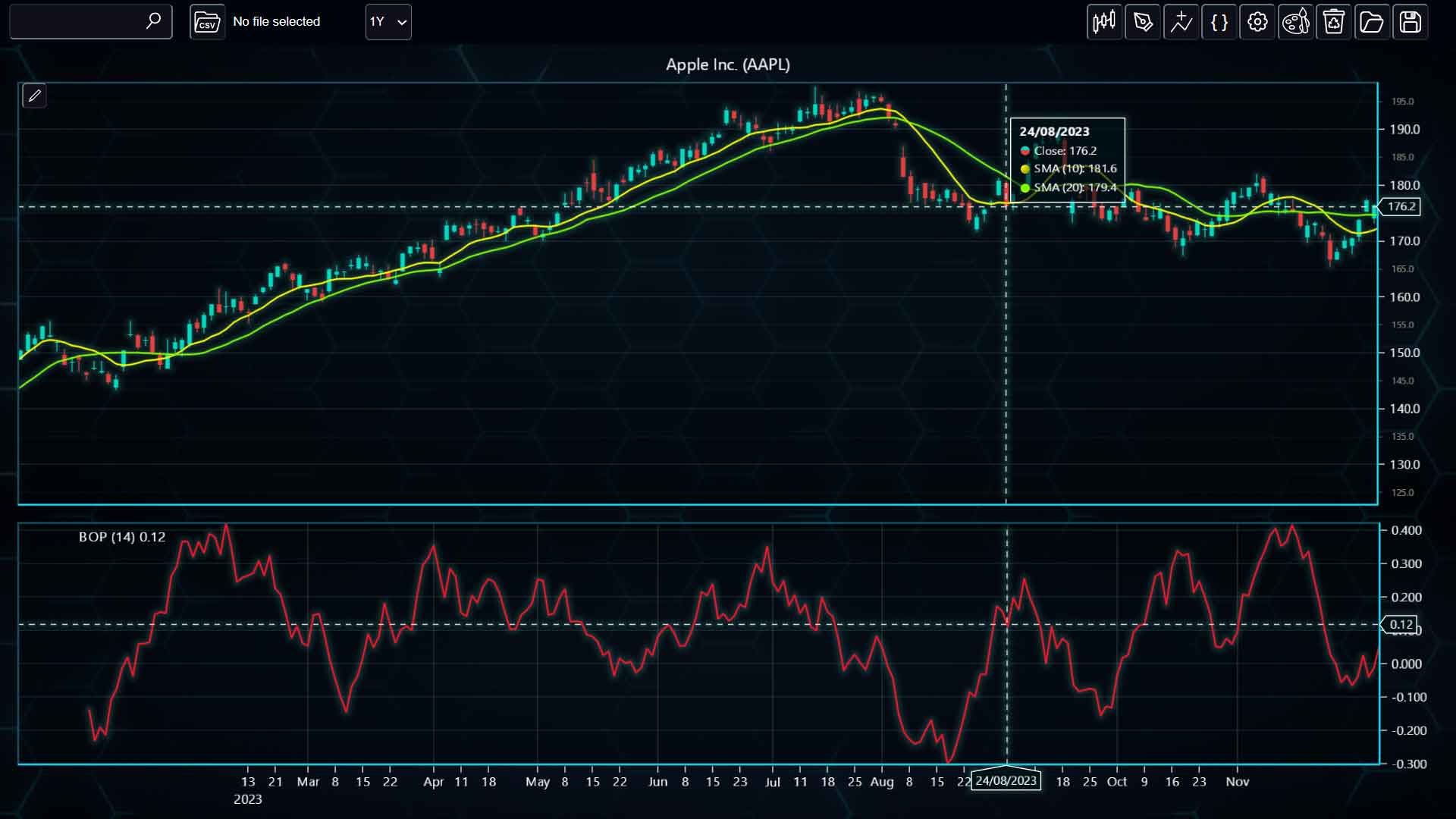
Developed by Igor Levshin, it is an oscillator focused on the strength of pressure in the market. Compares the strength of buyers against the strength of sellers to obtain buying and selling pressure.
When the result is positive, the power is given to the bulls. When it is negative, the power is given to the bears. This oscillator is very decisive and refers to its name.
Formula:
BOP = (Close - Open) / (High - Low)Commodity Channel Index (CCI)
Developed by Donald Lambert, CCI calculates the difference between a current price and a historical price. If the CCI is greater than zero, it indicates that the price is higher than the historical average. If the CCI is less than zero, it indicates that the price is lower than the historical average.
Like other indicators, the CCI also helps in detecting trends and their weaknesses, as well as overbought and oversold. Bullish trends can be detected when the CCI is close to a positive hundred. A negative hundred indicates a bearish trend.
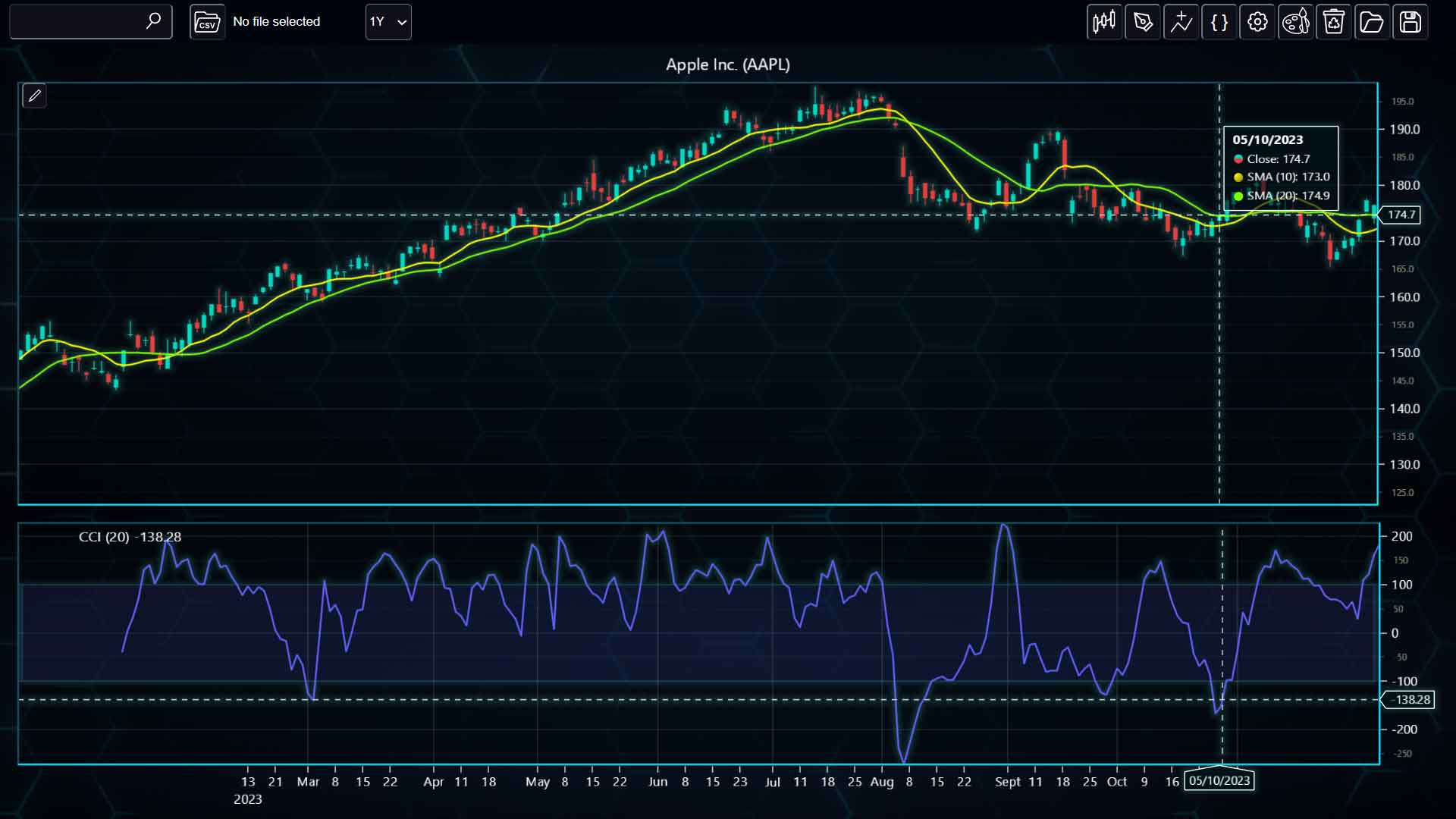
Formula:
CCI = (Typical Price - MA) / (.015 * Mean Deviation)
Center of Gravity (COG)
The Center of Gravity (COG) indicator is a technical analysis indicator that is used to identify support and resistance levels, as well as to generate trading signals. It was developed by John F. Ehlers in 2002 and is based on the idea that prices tend to gravitate towards a central value. This oscillator is more accurate in reading long periods, although very long periods can generate fewer signals.
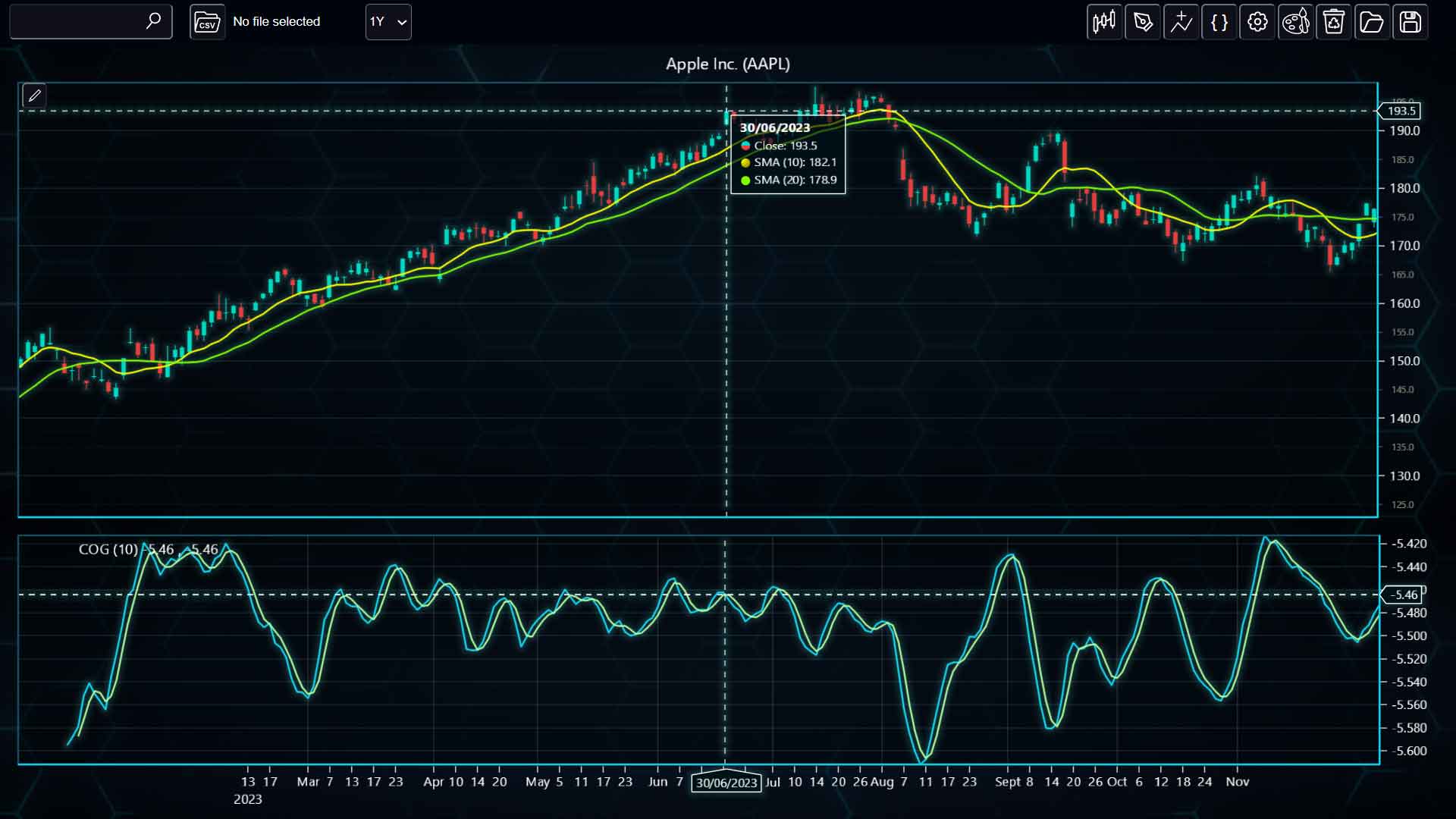
Formula:

Chande Forecast Oscillator (CFO)
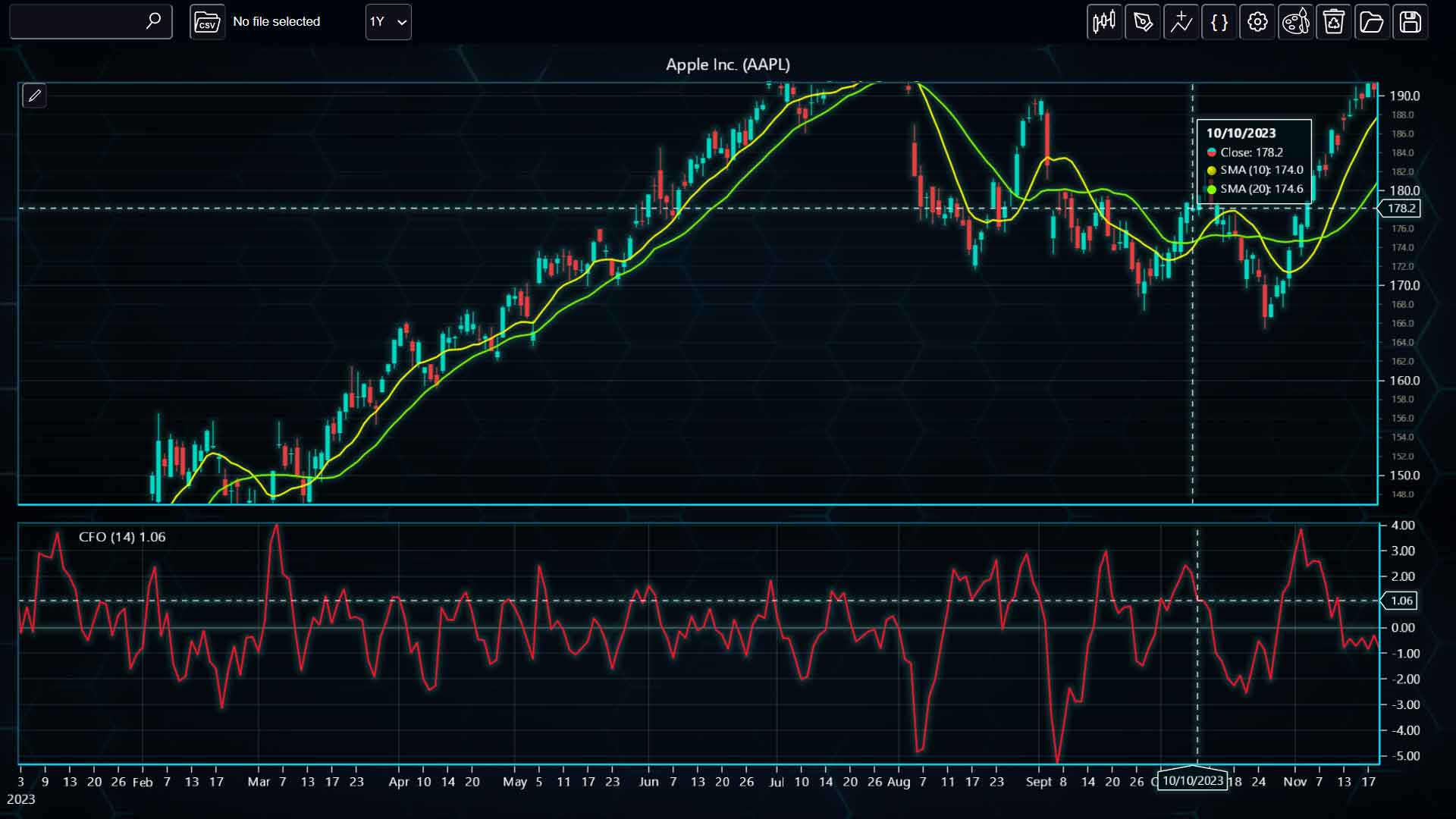
This version of the Chande oscillator focuses on predicted outcomes. Generates a difference between the closing price and the linear regression forecast for a given number of periods.
When the forecast price is higher than the closing price, the oscillator will be above zero (Bullish), but if the price is negative, the oscillator will be below the closing price (Bearish).
Chande Momentum Oscillator (CMO)
Developed by Tushar Chande, this oscillator is responsible for showing the strength or weakness of a price in a stock. The force is calculated based on the momentum indicators (Momentum Indicator). These indicators make use of the Relative Strength Index (RSI) and Moving Average Convergence/Divergence (MACD).
The Chande oscillator gets the difference between current profits and current losses. This result is divided by the sum of all price movements in the period.

Formula:
CFO = (SHC – SLC / SHC + SLC) X 100Where:
- SHC = the sum of higher closes over N periods
- SLC = the sum of lower closes of N periods
Coppock Curve
Developed by Edwin Coppock, it is a momentum indicator. This indicator is used to identify recessions and rallies in the market, as well as to show buy and sell signals. To calculate this indicator, a 10-month weighted moving average is used, the result of the sum of a 14-month and an 11-month exchange rate.
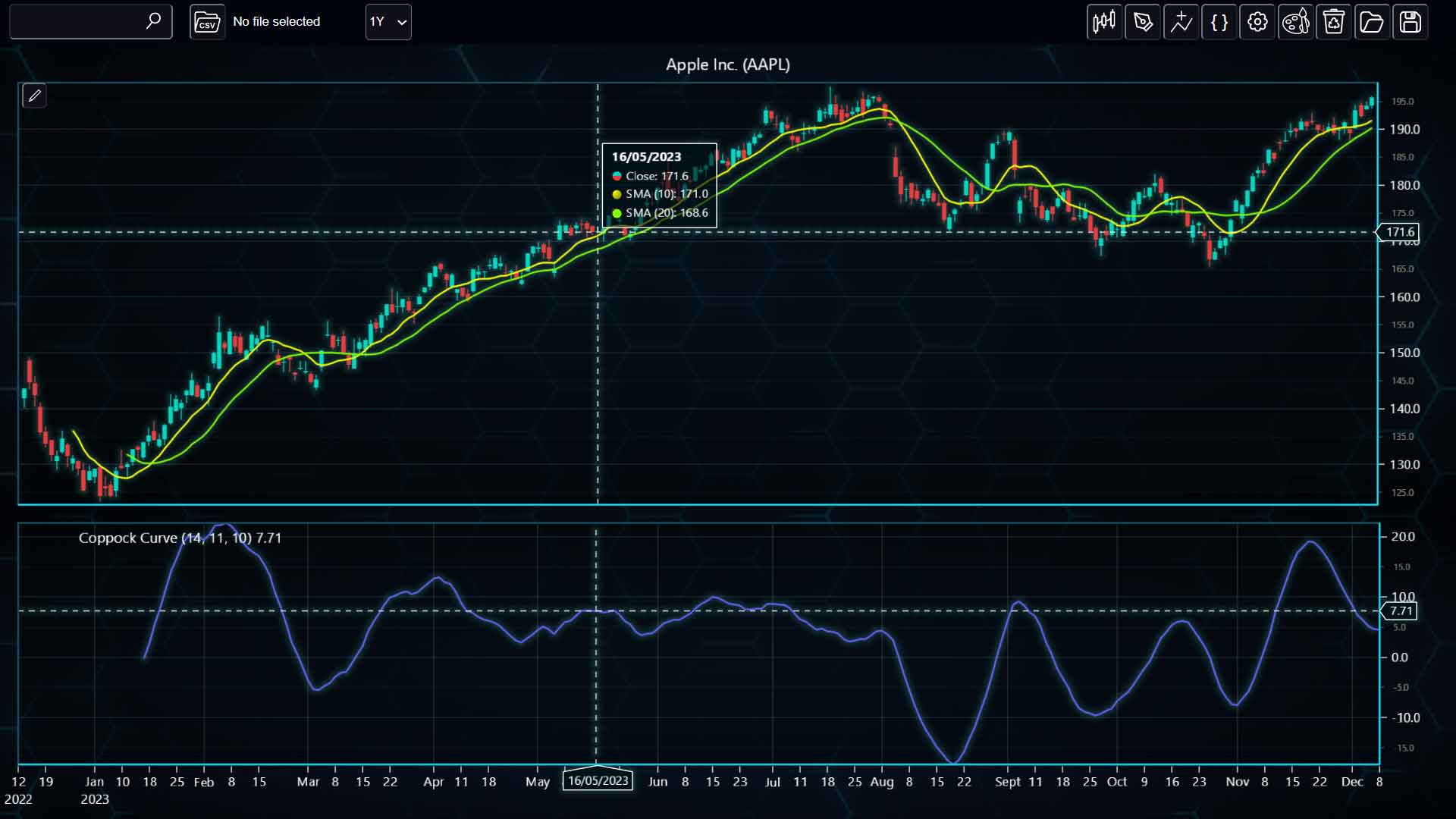
Formula:
Coppock = MA10 of (RC14 + RC11)Where:
- MA10 = 10-period moving average.
- RC14 = Rate of change 14 periods.
- RC11 = Rate of change 11 periods.
Detrended Price Oscillator (DPO)
Indicators focused on identifying cycles and eliminating price trends. Not being a momentum indicator, the DPO is only used to estimate cycle length and locate highs and lows.
If the DPO exceeds the zero level, it indicates that the current price is equal to another in the past. The trend will depend on whether the DPO is above zero or below it. If the value is greater than zero, the trend is bullish, if the trend is below, the trend is bearish.

Formula:
- Decide on the time frame that you wish to analyze. Set n as half of that cycle period.
- Calculate a simple moving average for n periods.
- Calculate (n / 2 + 1).
- Subtract the moving average, from (n / 2 + 1) periods ago, from the closing price:

Elder-Ray Index
Developed by Alexander Elder, this index is focused on following trends. Like most of the previously mentioned price oscillators, this index uses indicators to measure the amount of buying and selling pressure. This indicator depends on a 13-day exponential moving average, a Bull Power oscillator (Uptrend-positive), and a Bear Power oscillator (Downtrend-negative).
This indicator proposes a buying strategy when the trend is bullish or increasing (Although its value is still negative). If the trend is bearish or the bullish trend is losing strength, it is recommended to sell.

Formula:
Bull Power=Period High−13 Period EMA
Bear Power=Period Low−13 Period EMA
Where:
EMA = Exponential Moving Average
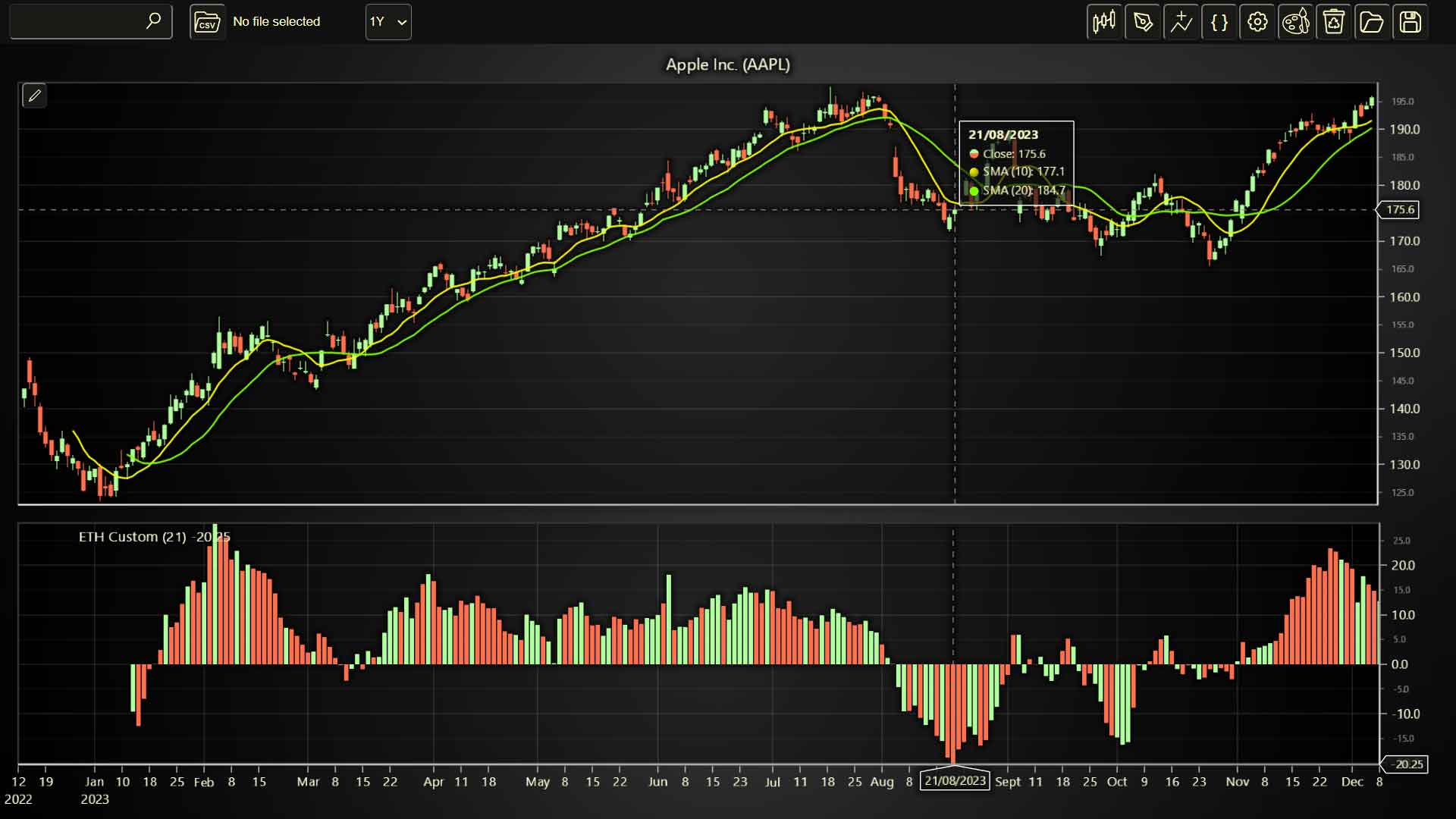
Elder Thermometer
Like the Elder-Ray Index indicator, this indicator was developed by Alexander Elder, it tries to show the highest absolute difference between the previous low minus the current low or the current high minus the previous high.
The Elder Thermometer is displayed on a histogram and uses colors to represent the state of the market. These colors simulate temperature changes, referring to changes in the market, thus obtaining the name thermometer. When the values exceed the exponential moving average, selling is recommended, but if the values are below the EMA, it is best to buy.
Fractal Chaos Oscillator (FCO)
This indicator works with fractal chaos bands, and oscillates above or below the zero value. By ignoring the zero value, there is no bullish or bearish trend. Therefore, if the band moves up, the FCO will swing up, if the band moves down, the FCO will swing up. If the band is flat, the FCO will remain at zero.

When the market is volatile, the FCO will remain at zero, if the FCO is above zero; this indicates that a trend exists. With what has already been explained, this indicator will not provide purchase and sale information, it will only show a trend signal, which will not be very precise because there is no calculation based on a moving average, trend, or any other parameter.
Intraday Momentum Index (IMI) / Relative Strength Index (RSI)
Indicators focused on generating overbought and oversold signals, using analysis (RSI). The relative strength index (RSI) is an oscillator developed by J. Welles Wilder Jr., focused on generating bullish and bearish momentum signals. This index helps us identify overbought when it fluctuates above 70 and indicates oversold when it fluctuates below 30.
Formula:
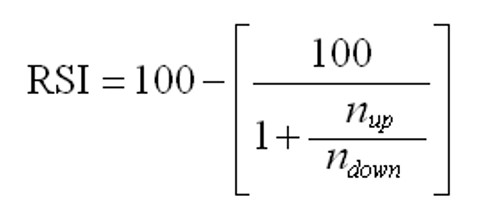
Where:
- nup = average of n-day up closes
- down = average of n-day down closes
- (most analysts use 9 – 15 day RSI)
The IMI helps analyze changes in price over the course of the day, rather than analyzing fluctuations in the outcome of several days. Usually, the candlestick chart is used to read the IM:

Formula:
IMI = (Gains/(Gains + Losses)) x 100Where:
- Gains = Sum of positive price changes multiplied by your trading volumes.
- Losses = Sum of negative price changes multiplied by your trading volumes.
Moving Average Convergence/Divergence (MACD)
A momentum indicator that shows the relationship of two exponential moving averages (EMAs), which have different numbers of periods. To obtain the MACD, a 26-period EMA is subtracted from the 12-period EMA. Bullish trends are determined when the MACD line is above zero. When the line is below zero, a bearish trend is determined.

The MACD can make highs or lows above price highs and lows, which is defined as a divergence. If the divergence is maintained in the long term it may indicate a bullish trend.
Formula:
MACD= 12 Period EMA – 26 Period EMAFor the MACD, custom versions can be generated (MACD Custom), which generates signals including zero line crossover, signal line crossover, and divergence in the indicator and price direction.
Conclusion
We come to the end of part 1 of price oscillators, for the second part, don’t forget to check the price momentum oscillators review. This article was divided into two parts since the content is too long. The topic of oscillators and financial indicators is quite complex, but the basic idea could be said to be similar to all of them.
Price Oscillators use of two moving averages and other indicators (such as the RSI), to help determine trends as accurately as possible. Oscillators are represented as a line oscillating around a midline. These price oscillators also help show the difference between the values of two exponential moving averages.
Changes in prices located within a period are also measured, for this reason, they are called price oscillators. In the next part, we will see more price momentum oscillators, so I recommend that you give it a visit, since soon we will begin to perform programming exercises with the LightningChart tools.
Thank you so much, bye!

Omar Urbano
Software Engineer


Continue learning with LightningChart
![[Tutorial] How to embed interactive charts in PowerPoint presentations](https://lightningchart.com/wp-content/uploads/2022/12/Interactive-Charts-in-PowerPoint-feature-image.jpg)
[Tutorial] How to embed interactive charts in PowerPoint presentations
Written by a human | Updated on April 9th, 2025Embed interactive charts in PowerPoint presentations Embedding charts within PowerPoint presentations has always been possible but perhaps one of the most ignored possibilities is actually embedding web applications...
Motorsports Analytics
Updated on April 10th, 2025 | Written by human Motorsports Analytics Large companies in the motorsports industry are collecting huge volumes of real-time data coming from different sources on and off the pitch during racing competitions. These data are both...
High-Performance Charting Controls for Fintech App Development
Written by a human | Updated on April 10th, 2025Charting Controls for Fintech Apps Money makes the world go round and as such, tracking and controlling financial transactions and information are some of the most important activities to do for any...



If you have any questions, feel free to contact us!



©LightningChart Ltd 2026. All rights reserved.