







EEG Frequency Analysis, Methods, & EEG Data Best Practices
Article
An EEG Frequency Analysis is a neuroimaging technique that captures the electrical activity of the human brain.
Deepak Wagh
Senior Digital Marketing Associate


Introduction to EEG Frequency Analysis
Electroencephalography (EEG) is a powerful neuroimaging technique that captures the electrical activity of the human brain, providing invaluable insights into neural functioning. EEG frequency analysis is a critical method of interpreting these complex brain signals, allowing researchers and clinicians to decode the intricate patterns of neural oscillations.
What is EEG Frequency Analysis?
EEG frequency analysis involves examining the different frequency components of brain electrical signals. By breaking down EEG recordings into specific frequency bands, researchers can gain deep insights into brain functionality, cognitive states, and neurological conditions.
Use Cases of EEG Frequency Analysis
EEG frequency analysis finds applications across multiple domains:
- Medical Diagnosis: Identifying neurological disorders like epilepsy, sleep disorders, and brain injuries
- Cognitive Research: Understanding cognitive processes, attention, memory, and emotional states
- Neuroscience: Exploring brain connectivity, neural development, and cognitive mechanisms
- Brain-Computer Interfaces: Developing advanced communication technologies for individuals with motor disabilities
Psychiatric Research: Analyzing brain activity in mental health conditions
Understanding EEG Frequency Bands

EEG signals are categorized into distinct frequency bands, each associated with specific physiological and cognitive states:
Delta Waves (0.5-4 Hz)
- Characteristics: Slowest brain waves
- Associated States: Deep sleep, healing, and regeneration
- Typical Contexts: Infant brain development, deep meditation
Theta Waves (4-8 Hz)
- Characteristics: Slow oscillations
- Associated States: Deep relaxation, creativity, emotional processing
- Typical Contexts: Meditation, REM sleep, emotional learning
Alpha Waves (8-13 Hz)
- Characteristics: Moderate frequency waves
- Associated States: Relaxed alertness, calm focus
- Typical Contexts: Mindfulness, light meditation, relaxed wakeful states
Beta Waves (13-30 Hz)
- Characteristics: Faster oscillations
- Associated States: Active thinking, problem-solving, concentration
- Typical Contexts: Active cognitive processing, normal waking consciousness
Gamma Waves (30-100 Hz)
- Characteristics: Highest frequency waves
- Associated States: Peak cognitive functioning, information processing
- Typical Contexts: Advanced cognitive tasks, heightened perception
Time-Frequency Analysis in EEG

Time-frequency analysis is a technique that allows us to examine how the frequency content of a signal changes over time. This is particularly useful for EEG signals, as brain activity is dynamic and exhibits time-varying frequency patterns.
Key Methods of Time-Frequency Analysis
- Short-Time Fourier Transform (STFT)
This method divides the signal into short segments and applies the Fourier transform to each segment. STFT provides a time-frequency representation of the signal, but its resolution is limited by the window size.
-
- Divides signal into short time windows
- Applies Fourier Transform to each window
- Provides time-localized frequency information
- Wavelet Transform
This technique uses wavelets, which are mathematical functions with specific time-frequency properties, to analyze the signal. Wavelet transform offers better time-frequency resolution compared to STFT, making it suitable for analyzing transient events in EEG signals.
- Offers superior time-frequency resolution
- Adapts window size based on frequency
- More flexible than traditional Fourier methods
Methods of EEG Spectral Analysis
What is EEG Spectral Analysis?
Spectral analysis transforms time-domain EEG signals into frequency-domain representations, revealing underlying neural oscillations and patterns.
Key Techniques
- Fast Fourier Transform (FFT)
This algorithm efficiently computes the discrete Fourier transform, allowing us to obtain the frequency spectrum of the EEG signal.
- Rapid computational method
- Converts time-domain signals to the frequency spectrum
- Essential for processing complex EEG data
- Power Spectral Density (PSD)
The PSD represents the power of the signal at each frequency. It provides information about the dominant frequency components and the overall power distribution in the signal.
- Measures signal power distribution across frequencies
- Identifies dominant frequency components
- Critical for understanding neural activity intensity
Spectral analysis helps identify specific patterns in EEG signals, such as:
- Event-related potentials (ERPs): Time-locked changes in brain activity in response to specific stimuli or events.
- Oscillatory activity: Rhythmic patterns of neural activity, such as alpha and beta rhythms.
- Interictal spikes: Brief bursts of high-frequency activity associated with epilepsy.
Challenges and Best Practices in EEG Frequency Analysis
EEG data analysis, while powerful, presents several challenges that must be addressed to ensure accurate and reliable results. These challenges include:
Signal Noise
- Biological Artifacts: These include muscle activity (electromyography, or EMG), eye movements (electrooculography, or EOG), and cardiac activity (electrocardiography, or ECG). These artifacts can significantly interfere with the underlying brain signals, making it difficult to isolate the neural activity of interest.
- Environmental Noise: External factors such as power line interference, electromagnetic fields, and ambient noise can introduce noise into the EEG signal.
Data Complexity
- Non-Stationarity: Brain activity is constantly changing, making it difficult to apply stationary signal processing techniques.
- Individual Variability: Different individuals exhibit varying levels of brain activity, making it challenging to establish universal norms.
- Low Signal-to-Noise Ratio (SNR): The weak neural signals often get masked by noise, requiring sophisticated signal processing techniques to extract meaningful information.
Best Practices for Addressing Challenges:
To overcome these challenges and ensure the validity of EEG frequency analysis, the following best practices should be followed:
Data Acquisition
- High-Quality Equipment: Employing high-quality EEG systems with low noise levels and high sensitivity is crucial.
- Optimal Electrode Placement: Proper electrode placement according to standardized systems like the 10-20 system helps to minimize artifact contamination and maximize signal quality.
- Comfortable Environment: Creating a comfortable and quiet environment for the subject can help reduce environmental noise and subject discomfort, which can affect brain activity.
Data Preprocessing
- Artifact Removal: Techniques such as Independent Component Analysis (ICA) and Principal Component Analysis (PCA) can effectively remove artifacts like eye blinks, muscle activity, and line noise.
- Filtering: Applying band-pass filters can help isolate specific frequency bands of interest, while notch filters can remove power line interference.
- Baseline Correction: Subtracting the average signal amplitude over a specific time window can help remove baseline drifts and improve signal clarity.
Data Analysis
- Time-Frequency Analysis: Using techniques like STFT and wavelet transform can provide insights into the time-varying nature of brain activity.
- Spectral Analysis: Calculating the power spectral density (PSD) can help quantify the power distribution across different frequency bands.
- Statistical Analysis: Employing statistical tests like t-tests and ANOVA can help determine the significance of differences between experimental conditions or groups.
- Machine Learning: Advanced machine learning techniques, such as support vector machines (SVM) and neural networks, can be used to classify and predict brain states based on EEG features.
- Utilizing advanced visualization tools: A high-performance Charting library like LCJS which excels in handling large datasets and real-time data streams, makes it ideal for EEG data analysis.
By adhering to these best practices and leveraging advanced techniques, researchers can extract valuable insights from EEG data and advance our understanding of brain function and behavior.
Performance Considerations
When conducting EEG frequency analysis, high-performance data transmission and processing are crucial. Technologies like LCJS provide exceptional capabilities for handling complex, high-dimensional EEG datasets with remarkable efficiency.
Conclusion
EEG frequency analysis represents a sophisticated intersection of neuroscience, signal processing, and advanced computational techniques. As technology evolves, our ability to decode brain signals continues to expand, offering unprecedented insights into human cognitive and neurological functioning.
Continue learning with LightningChart

Trend Lines in Trading
Trend lines are among the simplest yet most powerful tools in technical analysis. They help traders visualize market direction, identify potential support and resistance levels, and make more informed trading decisions. Despite their simplicity, trend lines remain a...
Best Python Charting Library in 2026
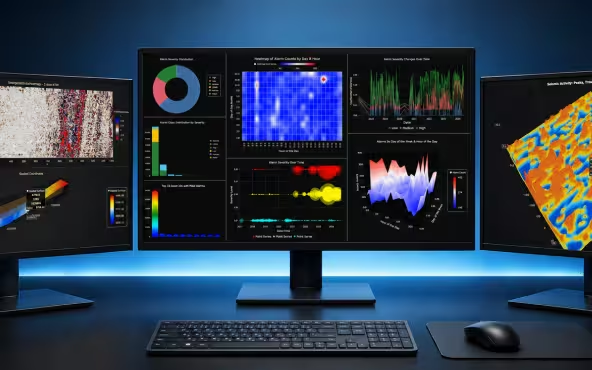
Python's charting ecosystem is large, overlapping, and regularly misunderstood. Most comparison guides stop at Matplotlib, Plotly, and Seaborn. This one goes further: it covers what happens when your datasets grow large, your update rates increase, or your chart types...
Best TradingView Charting Library Alternative
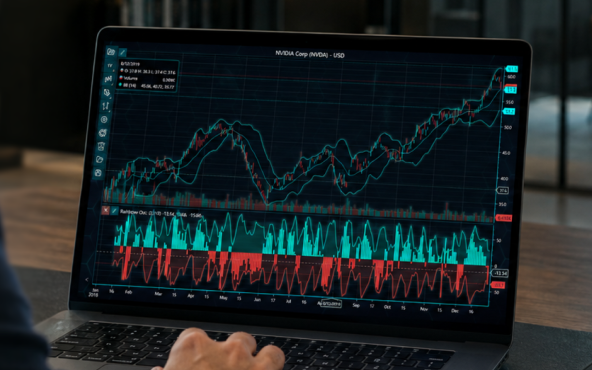
TradingView's charting libraries are the most visible option for fintech developers. Visibility is not the same as capability. This guide is for developers who have hit the wall on candle count limits, watermark restrictions, branding requirements, real-time...



If you have any questions, feel free to contact us!



©LightningChart Ltd 2026. All rights reserved.