Scatter Chart
Scatter charts can be created using ChartXY and Point Series. Bubble Chart can also be created using Point Series, by specifying unique point size values.


Creating Point Series
series = chart.add_point_series()
Adding Data
There are many different ways you can add data to a Point series. The most basic way is to specify two lists of numbers, one for X coordinates, and another for Y coordinates.
# Using x and y lists:
x_values = [0, 1, 2, 3]
y_values = [1, 3, 2, 4]
series.add(x_values, y_values)
Another common way of adding data is to read from a list of dictionaries/JSON-like objects:
# Using a list of dictionaries:
data_points = [
    {'x': 0, 'y': 1},
    {'x': 1, 'y': 3}
]
series.add(data=data_points)
Please refer to Adding Data to Charts section to see other available ways of adding data to a series.
Schema and Data Mapping
This section works the same as for Line series, to avoid duplication of guides, please refer to the section under Line
Customizing Point Appearance
Changing Point Color
Using individual point color:
import lightningchart as lc

series.set_point_color((255, 0, 0))
series.set_point_color('#FF0000')
series.set_point_color('red')
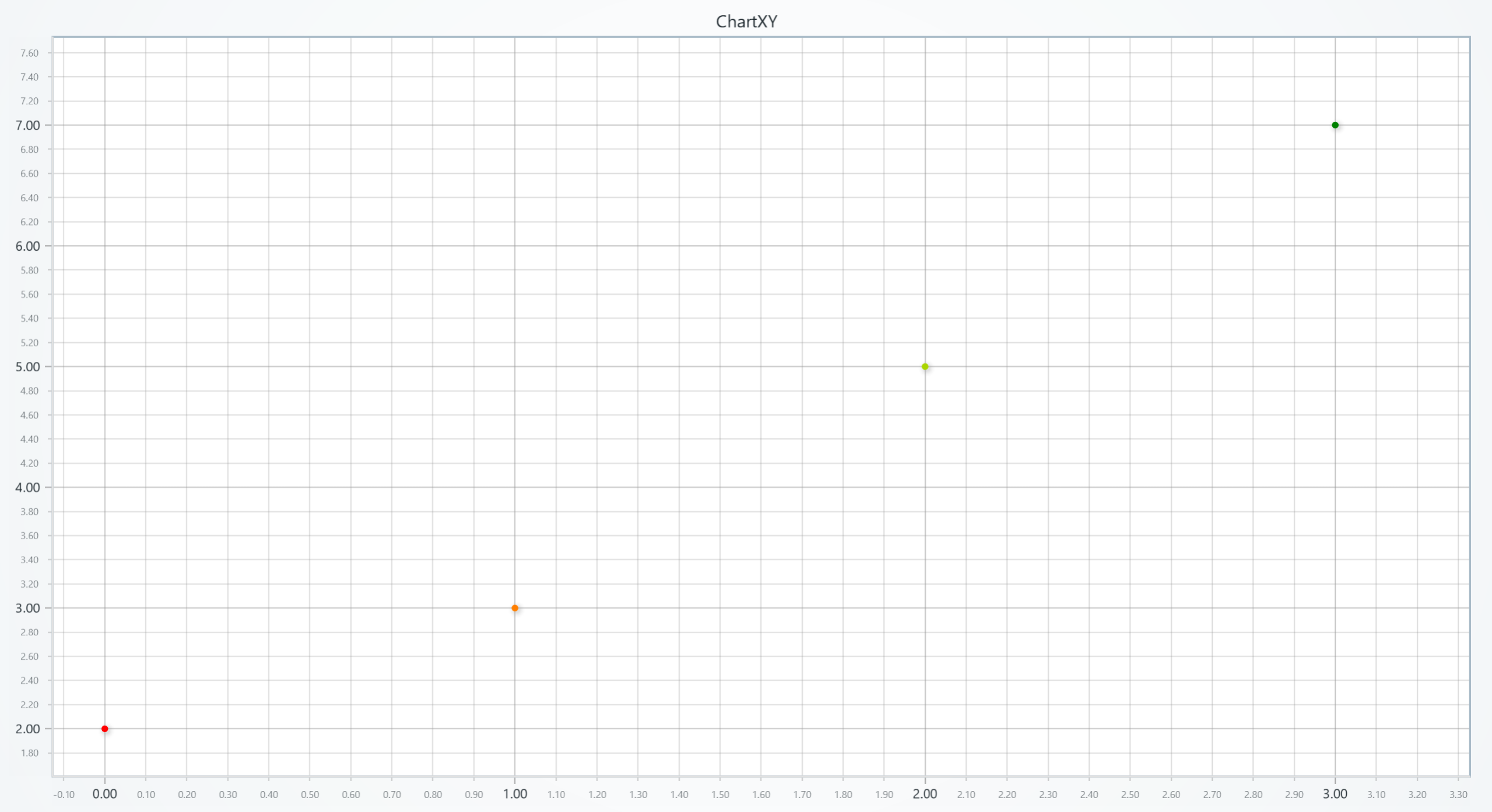
Using lookup table for point coloring:
chart = lc.ChartXY(title='ChartXY', theme=lc.Themes.Light)
series = chart.add_point_series()


x_values = [0, 1, 2, 3]
y_values = [2, 3, 5, 7]
series.add(x_values, y_values)

# Define a palette for the point coloring to interpolate between red, yellow, and green:
series.set_palette_point_coloring(
    steps=[
        {'value': 2, 'color': '#FF0000', 'label': 'Min'},
        {'value': 4, 'color': (255, 255, 0)},
        {'value': 7, 'color': 'green', 'label': 'Max'},
    ],
    look_up_property='y',
    interpolate=True,
)

# With formatted legend display:
series.set_palette_point_coloring(
    steps=[
        {'value': 0, 'color': '#0000FF'},
        {'value': 100, 'color': '#FF0000'},
    ],
    look_up_property='value',
    formatter_precision=2,           # Decimal places
    formatter_unit='mag',             # Unit suffix
    formatter_scale=1.5,              # Scale values
    formatter_type='scientific',      # 'standard', 'compact', 'engineering', 'scientific'
    formatter_operation='floor',      # 'none', 'round', 'ceil', 'floor'
)

Changing Point shape
series.set_point_shape('circle')
Available patterns include: "arrow", "circle", "cross", "diamond", "minus", "plus", "square", "star" and "triangle".
Changing Point size
series.set_point_size(5)
Changing Point rotation
series.set_point_rotation(45)
Changing Point stroke style
series.set_point_stroke_style(style='solid', thickness=2, color="#ff0000")
Enabling or disabling individual point color attributes
series.set_individual_point_color_enabled(True)
Custom Point and Video Styling
These methods allow you to customize the appearance of points by using images or videos.
Set Point Image Style
Sets the fill style of points using an image. The image can be provided as a local file path or a URL.
# Use an image from a local file as the point style:
series.set_point_image_style("D:/path/to/local_image.png")

# Or use an image from a URL:
series.set_point_image_style("https://example.com/image.jpg")


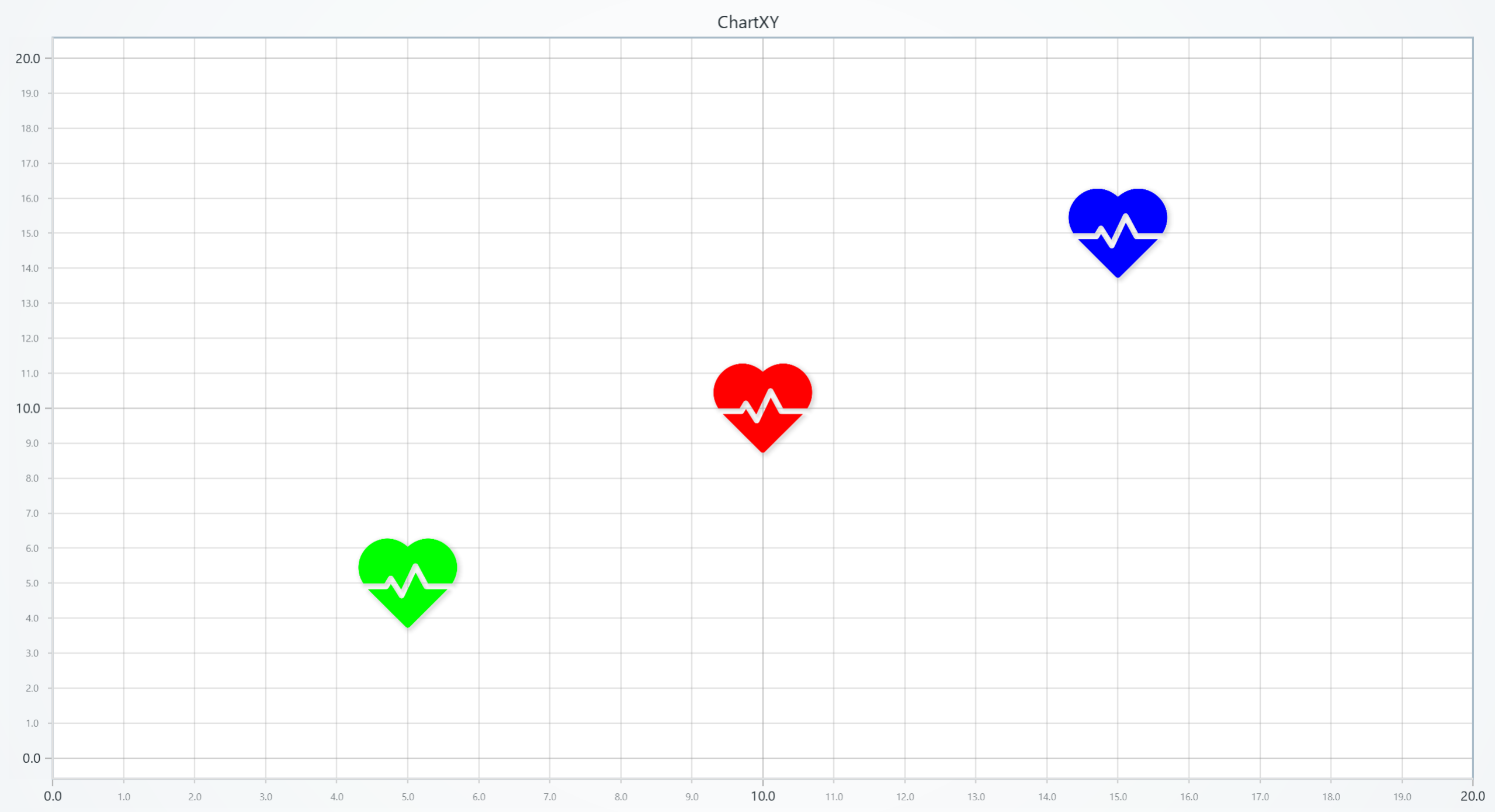
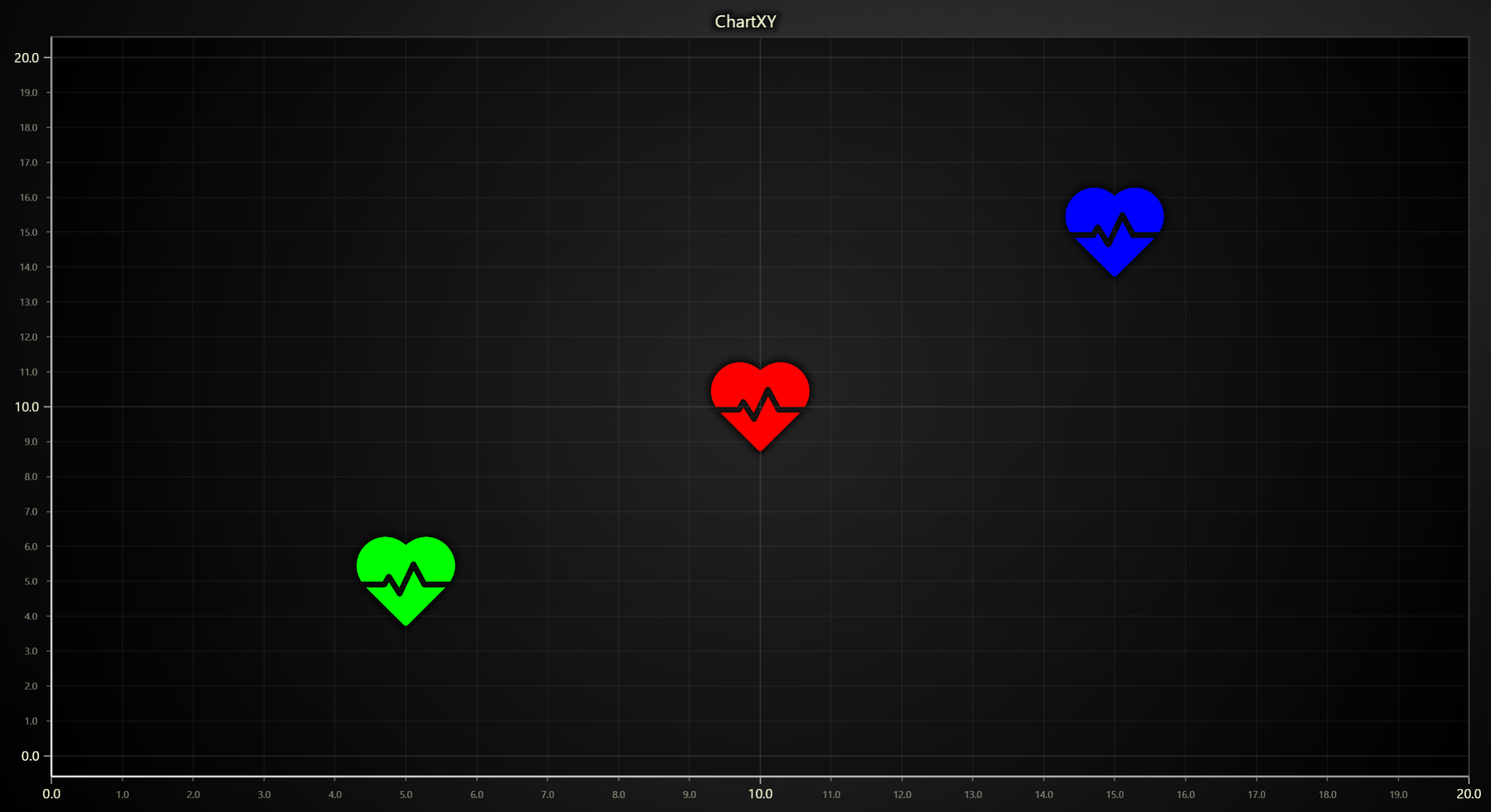
Set Custom Point Shape
Allows setting a custom shape for points by using an icon.
# Use an icon from a local file as the point style:
series.set_custom_point_shape("D:/path/to/local_icon.png")

# Or use an icon from a URL:
series.set_custom_point_shape("https://example.com/icon.jpg")
Set Point Video Style
Sets the point fill style to a video.
# Set a video style for points using a local video file:
series.set_point_video_style("D:/path/to/local_video.mp4")

# Or use a video from a URL with a different fit mode:
series.set_point_video_style("https://example.com/video.mp4")
Legend
Please see common legend section.