Derived data properties
LightningChart DataSet class supports defining custom derivation rules, meaning data values can be derived from other properties' values.
// Example of derived data properties using built-in derivation implementation: Simple Moving Average (SMA)
const dataSet = new DataSet({
    schema: {
        x: { pattern: 'progressive' },
        y: { pattern: null },
        sma: { pattern: null, derived: builtInDataDerivations.SMA({ source: 'y', window: 100 }) },
    },
})

chart.addLineSeries().setName('Y').setDataSet(dataSet, { x: 'x', y: 'y' })
chart.addLineSeries().setName('SMA').setDataSet(dataSet, { x: 'x', y: 'sma' })
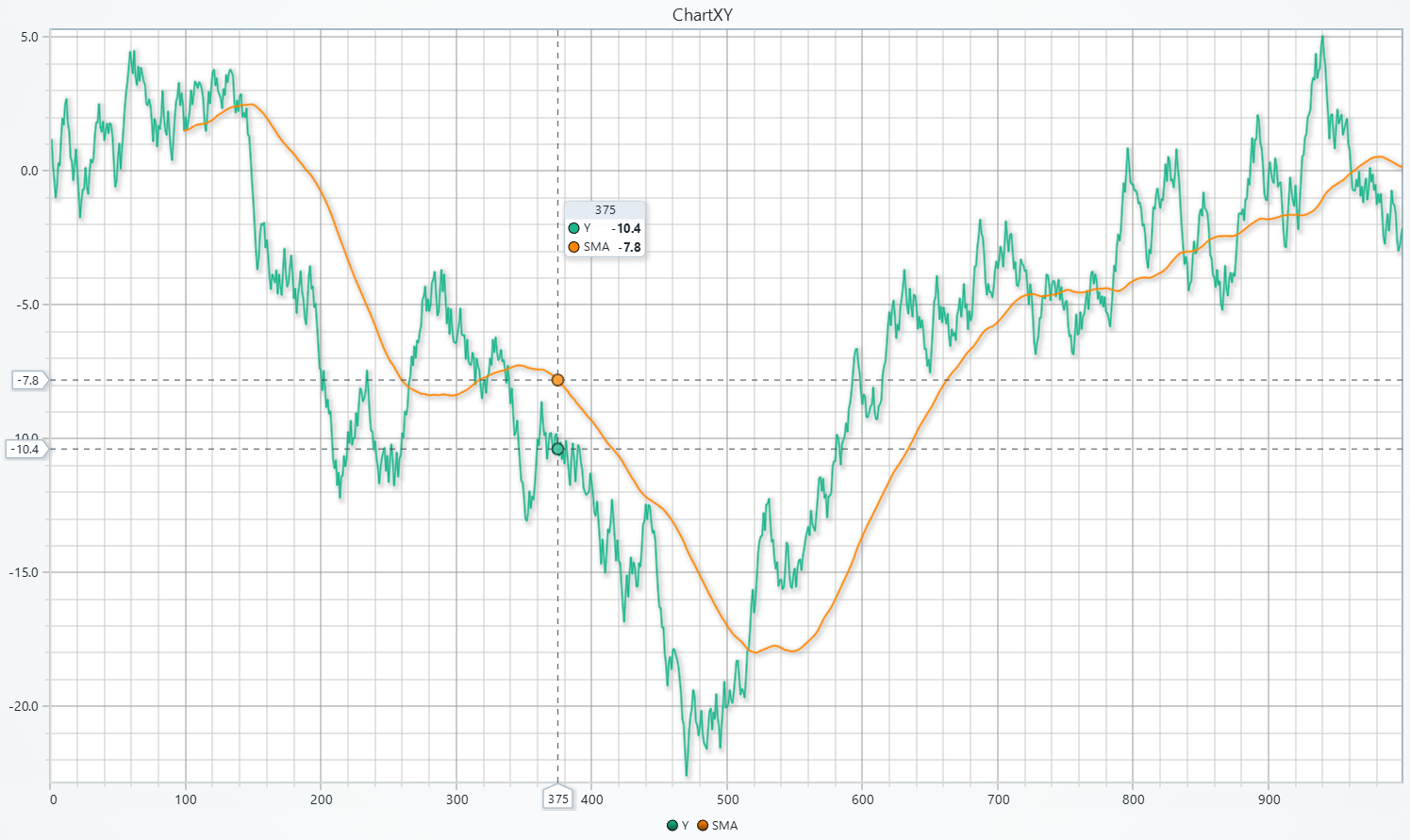
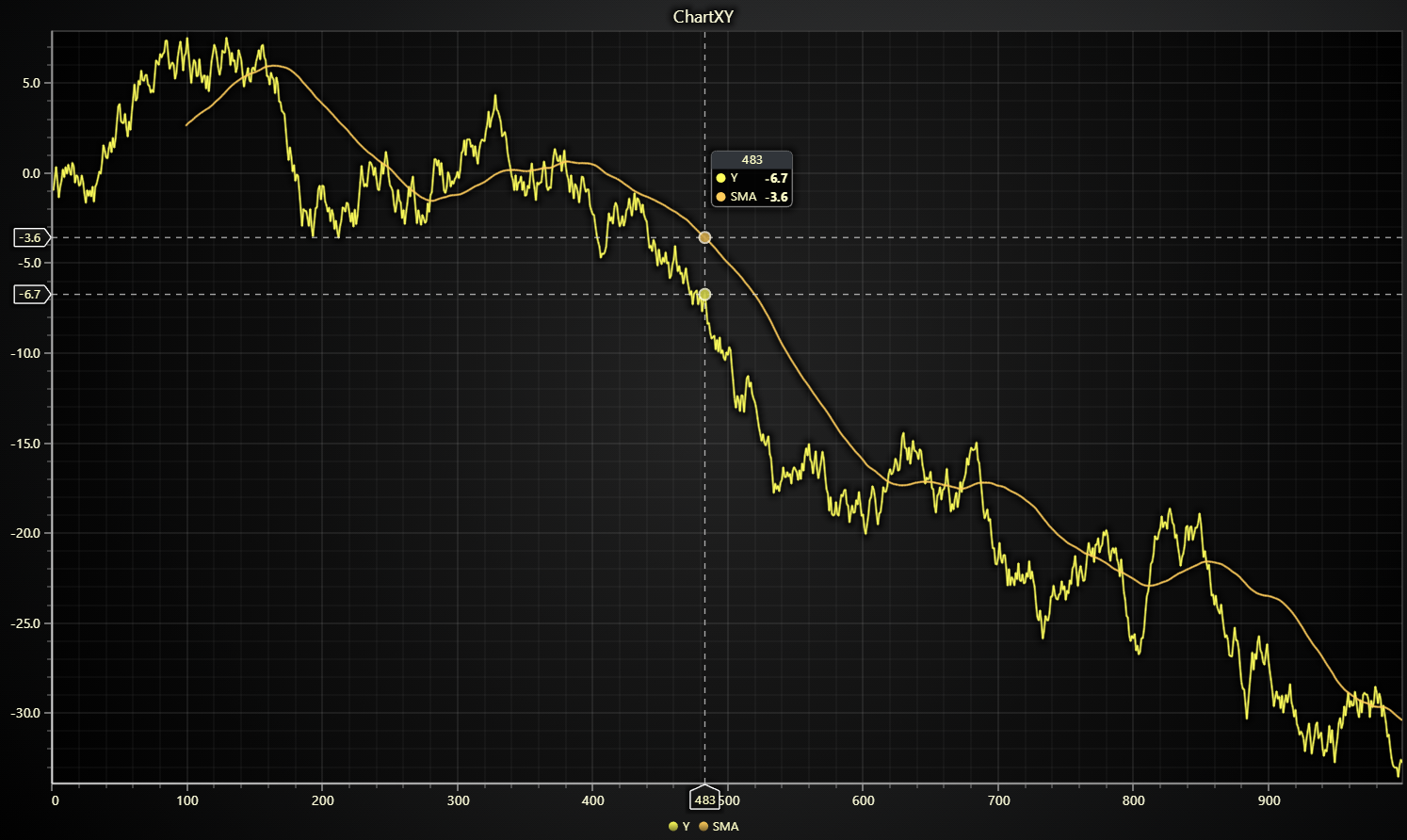
In above example, you would only feed in data values for x and y -> sma is automatically calculated.
You can specify any custom callback to do this kind of calculations:
const dataSet = new DataSet({
    schema: {
        x: { pattern: 'progressive' },
        y: { pattern: null },
        example: {
            pattern: null,
            derived: (info) => {
                // other properties' values can be referenced through `info`
                return new Array(info.newCount).fill(0).map(Math.random)
            },
        },
    },
})
If your derivation needs to reference previously supplied data point values, it is recommended to use DataSet.iterateOverRingBuffers for optimal performance. For reference, here is the implementation of the built-in SMA derivation:
const SMA = (arg: { window?: number; source: string }): DataSetDerivedPropertyConfig => {
    const smaWindow = arg?.window ?? 20
    const source = arg.source
    return (state) => {
        if (state.newCount <= 0) return []
        const rawValuesNew = state.newValues[source]
        const rawRingBuffer = state.dataSet.ringBuffers[source]
        const rawValuesPrev =
            rawRingBuffer && state.firstNewSampleIndex >= smaWindow
                ? Array.from(state.dataSet.iterateOverRingBuffers({ first: state.firstNewSampleIndex - smaWindow })).map(
                        (iData) => rawRingBuffer[iData],
                    )
                : new Array(smaWindow).fill(Number.NaN)
        const rawValuesTrailing = [...rawValuesPrev, ...rawValuesNew]
        const newSMA = new Float64Array(state.newCount)
        for (let i = 0; i < newSMA.length; i += 1) {
            let sum = 0
            for (let offset = 0; offset < smaWindow; offset += 1) {
                const v = rawValuesTrailing[i + smaWindow - offset]
                sum += v
            }
            const sma = Number.isNaN(sum) ? Number.NaN : sum / smaWindow
            newSMA[i] = sma
        }
        return newSMA
    }
}